Poorly sequenced investments doing more harm than good in Africa

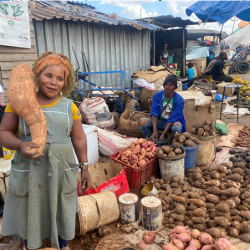
Poorly sequenced investments doing more harm than good in Africa Imagine the Japanese Embassy financing the building of a house at Mpilo Hospital in Bulawayo for victims of Gender-Based Violence but a few kilometres down the road Malaleni food market traders continue to sell their commodities in the open space with no shed to protect Read more about Poorly sequenced investments doing more harm than good in Africa[…]

When a vibrant sense of belonging is more important than selling commodities

When a vibrant sense of belonging is more important than selling commodities While corporates are more interested in agricultural commodities than producers, African territorial markets thrive on the notion that farmers, traders and consumers value a sense of belonging more than commodities. These key actors want to be part of something that feels like it’s Read more about When a vibrant sense of belonging is more important than selling commodities[…]

Why the elite should stop imposing their expectations on smallholder farmers

Bankers expect smallholder farmers to repay loans at a particular interest. For economists, African smallholder farmers are supposed to master return on investment. Nutritionists expect smallholder farmers to be food scientists just as agronomists and livestock specialists expect smallholder farmers to think and act like scientists. NGOs promoting farmer field schools see farmers as learners Read more about Why the elite should stop imposing their expectations on smallholder farmers[…]

When it’s counter-productive for development agencies to insert their banners in rural communities

After taking their good intentions to the grassroots and supporting rural communities to build dams, irrigation schemes, clinics, dip tanks and market sheds, many development agencies are fond of putting their banners at such community assets. While there might be nothing wrong with external organizations announcing their presence in particular communities, inserting banners complete with Read more about When it’s counter-productive for development agencies to insert their banners in rural communities[…]

The role of baseline studies in anchoring local solutions and resilience

In addition to unearthing community resilience and coping mechanisms, baseline studies can be good at identifying relevant partners and local expertise. A lot of market infrastructure in many African countries has remained unused because construction has not been adequately informed by baseline studies. Absence of baseline data also leads to mismatches between production and market Read more about The role of baseline studies in anchoring local solutions and resilience[…]

To what extent can a few beneficiaries transform a whole community?

To what extent can a few beneficiaries transform a whole community? Due to limited resources, among other reasons, development interventions often work with a few targeted beneficiaries hoping that knew knowledge or practices can trickle to the entire community. For instance, in a community of more than 1000 households, an intervention can support 50 households Read more about To what extent can a few beneficiaries transform a whole community?[…]

Empowering communities to appreciate and conduct research

If developing countries are going to only recognize and respect research results from formal research institutes and universities, they will continue excluding diverse voices and stifling ambition. While formal institutions in Africa are doing their thing, ordinary people in farming communities, fishing villages and informal markets are creatively shaping their own future and adapting in Read more about Empowering communities to appreciate and conduct research[…]

How consumers use their buying patterns to signal priorities

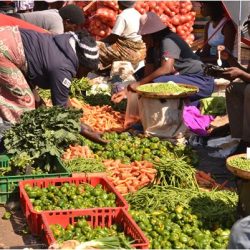
As buying patterns signify ordinary people’s priorities, developing countries should invest more in finding pockets of opportunity from micro-markets than pursuing mega deals. In most African countries, much of the overlooked growth is within open food markets from which the majority get food and income. An outside observer may see open markets as chaotic economic Read more about How consumers use their buying patterns to signal priorities[…]

Who really sets prices in the open market?

No matter how many times this question is answered, it continues to be asked again and again.  One of the reasons is that the answer may be correct but unbelievable. As in all other markets, rules of supply and demand influence pricing of agricultural commodities in open markets that are powerful ecosystems in developing countries.  Read more about Who really sets prices in the open market?[…]

How capital determines the structure of agriculture and food systems in Africa

How capital determines the structure of agriculture and food systems in Africa Although finance will not solve all challenges facing developing countries, the structure of African agriculture is largely shaped by the way capital flows into this fundamental sector. In Zimbabwe, for instance, more than 55% of the entire capital devoted to agriculture goes to Read more about How capital determines the structure of agriculture and food systems in Africa[…]