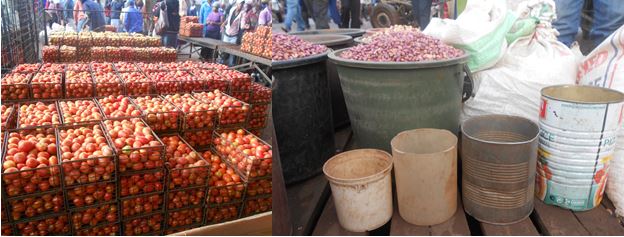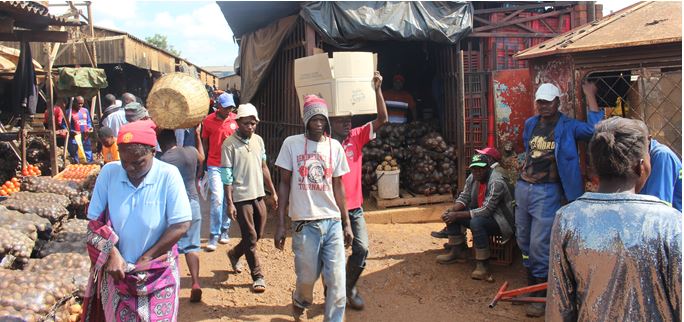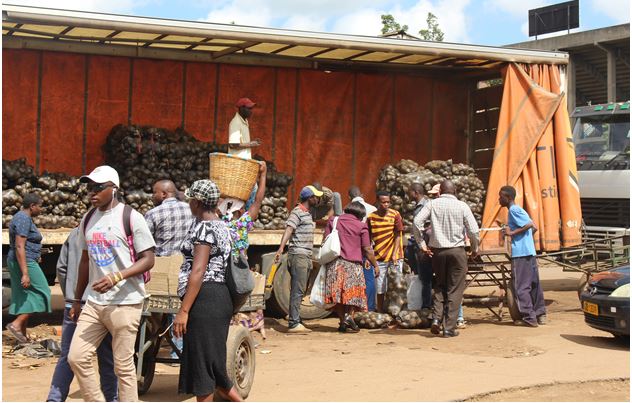
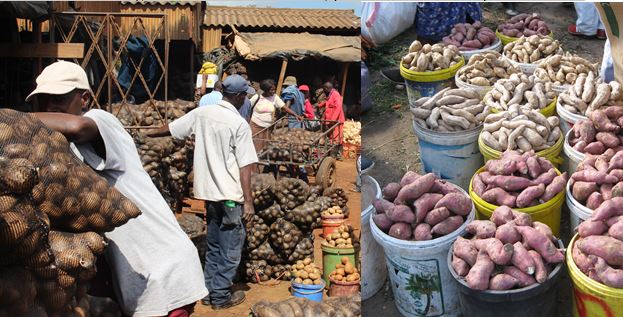
How people’s markets value satisfaction more than colonial measurements
The formal education system in developing countries has not taken time to explain and justify colonial measurements that continue to be used in attaching value…
Contrary to the hype in which ICTs are presented as a panacea, ICTs-related costs in many African countries eroding the meagre promised benefits. Countless studies…
Not much research is needed to prove that financial systems in most developing countries do not work for the majority of people and for the…
Although rural communities in Africa may not directly push-back donor support, murmurings of dissatisfaction with some development interventions are getting louder. Such concerns are being…
Policy makers in developing countries are often blamed for lacking the vision to craft appropriate agricultural policies that can guarantee food security and better standards…
While 70 percent of the population in most African countries live in rural areas, the bulk of food produced in rural areas is consumed in…
While many African countries are competing to lure investors into their agriculture sector, a lot still needs to be done in order to clearly identify…
Reducing market linkages to transactions is one of the major reasons why efforts to integrate smallholder farmers into value chains have failed to transform agriculture…
A major headache for many developing countries is developing criteria for valuating highly fluid and transitory economic activities that are now more prevalent. Employment creation…
Efforts to modernize African agriculture continue to focus on the supply-side at the expense of the demand side. In addition to infrastructure-driven agribusiness models, there…