Why farmers should know how their commodities perform on the market
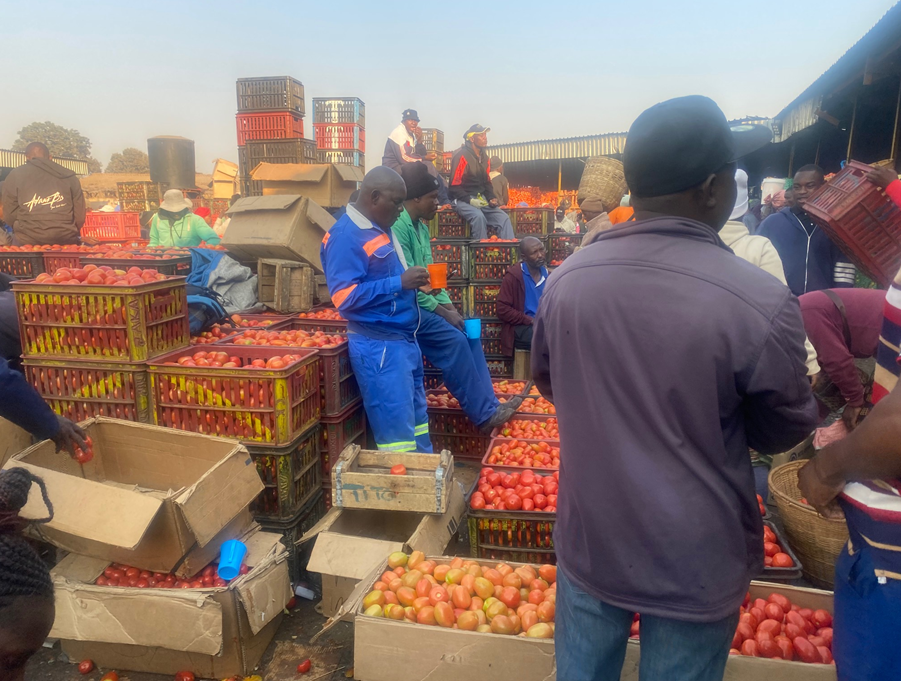
It is no longer enough for farmers to know how to produce particular commodities. This is because agricultural and food commodities participate in a competitive environment so, there is need to identify areas of improvement towards meeting customer expectations. Therefore, it is important for farmers to know market profiles and performance of commodities that they produce. Most farmers focus on production and productivity but lack information on market-related crop profiles and performance.
More importantly, farmers need to know competitors of their commodities (very close substitutes that compete with what they produce) because any change in the price of their commodities in the market result in significant change in demand of the same commodity as consumers move to or from substitutes. When farmers reduce a price for a commodity that does not have close substitutes, such an action has no influence on demand because consumers have no other option. Conversely, in cases where a commodity has very close substitutes, when farmers reduce prices of their commodities that have close substitutes, they tend to attract more customers from the close substitutes. Examples of close substitutes are in leafy vegetables like Covo, Rape and Tsunga as well as sweet potatoes and yams (madhumbe) which often compete for the same customers.
The powerful of carefully handling commodities before taking them to the market
The most taken for granted stage in agricultural supply chains and food systems is carefully handling commodities after production in order to increase shelf life or prepare for the market. The following few commodities have been selected to demonstrate best practices in harvesting, storing and preparation for the market. Farmers who produce for their own consumption with no surplus for the market may never know market expectations.
Potatoes
- Harvesting should not be done under raining condition because harvesting in muddy conditions affects the skin quality of the potatoes and reduces shelf life in the market.
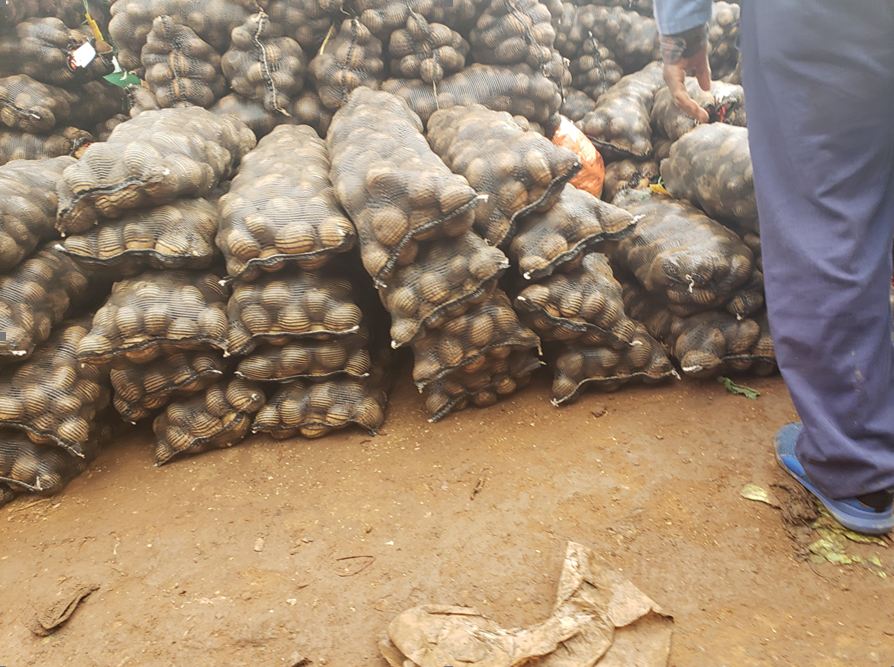
- Grading should be done soon after harvesting by size – removing rotten ones and cuts. The graded sizes should be clustered into Extra-large, Large, Medium, Small, Charts 1 and Charts 2 (very small, also called bullets).
- Never mix good tubers with damaged tubers because damaged ones spoil the good.
- Packaging should also be by sizes and grades, although some customers may prefer mixed.
- Never put tubers direct on the floor – lay them on dry grass or large cardboard boxes.
- Pockets should only when packaging for the market, not for storage.
- Storage should also be by size.
- Potatoes should not be exposed to direct sunlight. Store in a shade, piling them for a height of 20 cm and below. Bigger heights attract moisture and rotting. The shade should have proper ventilation especially during the day.
- Potatoes should not be stored for more than 5 days before being taken to the market. The longer the storage the lower the quality.
- After storage, when pocketing potatoes should be regraded because some would have gone bad or rotten.
Butternuts
- When harvesting butternuts, keep the nob of the stem to increases shelf life.
- When harvesting, the harvesting team should not throw butternuts.
- After harvesting, start grading by size from extra-large to small but the most common sizes are large, medium and small.
- Premature harvest fruit with very long green lines and pigment affects storage life
- Butternut can be stored in rooms or open space but avoid direct contact with floor and the wall. Advantages of storing butternuts include improving the quality. As it turns golden brown through storage, it becomes sweeter in taste.
- When pilling butternuts, you should leave a walking path and this is also for aerations.
- Butternuts can be kept up to 4 months.
- Factors affecting the storage timeframe include cool temperature and creating small pile of about 30cm high.
- During storage, continuously move them to select the one going bad, once every month.
- In storage you can use pockets hanging them or by pilling them in a circular shape.
- Never wash butternuts.
- Never put butternuts on the floor
- When packaging for the mass market, use big 60kg bags but when filled to the brim the bag can weigh up to 90kg. Farmers should use weighing scales to ensure exact measurement. Sometimes, counting is the right way of avoiding losses to middlemen. When counting the tubers/fruits, each bag can fill with 75-90 large sizes, 120 – 130 medium sizes or 120-140 small sizes.
Cucumbers
- Avoid bruising and cracking during harvesting, grading and packaging.
- Handle with care because the skin is too fragile.
- Don’t remove the stem nob.
- Grading should be according to size from Small, Medium and Large.Remove the defective ones.
- Storage can be under tree shade or properly built shade.
- Pilling should be done by grading to a height of about 15-20cm.
- Cucumber should not have direct contact with floors or the walls.
- Should be properly aerated and kept in a cool environment.
- For the market, cucumber should be packed in 60kg bags.
- Cucumber can only be stored for a maximum of one day or just over night before going to the market because they are highly perishable.
- It’s more advisable to harvest cucumber when transport is already at the farm.
Sweet Potatoes
- After harvesting, grade into Large, Medium and Small as well as very small and rejects.
- Sweet potatoes can be packaged into 60kg for the market.
- Sweet potato leaves are often used in sealing the bag.
- Sweet potatoes can be stored up to 1 week even on the floor and can piled up to 1 meter. They are strong and have a long shelf life.
- Selling of sweet potatoes formal markets is by weight.
- In Zimbabwe, a traditional method called Muridi was used for storing sweet potatoes in a big pit dug to a depth of 1 meter.
Charles@knowledgetransafrica.com / charles@emkambo.co.zw /
Website: www.emkambo.co.zw / www.knowledgetransafrica.com
Mobile: 0772 137 717/ 0774 430 309/ 0712 737 430