

How technologies are reshaping the expectations of farmers and consumers
If drones can count the number of trees in a forest and assess the quality of soil and water, why are there no similar technologies that can automatically show nutrients in indigenous fruits and other foods? The medical field and the aviation industry have advanced so much that they now have scanners and satellite technologies that generate real-time data with remarkable accuracy. Why are all these advances in digital and scientific technologies not being transferred to African food systems to address food loss and create viable agro-processing enterprises? These questions underlie expectations of smallholder farmers who continue to endure huge food loss in their communities.
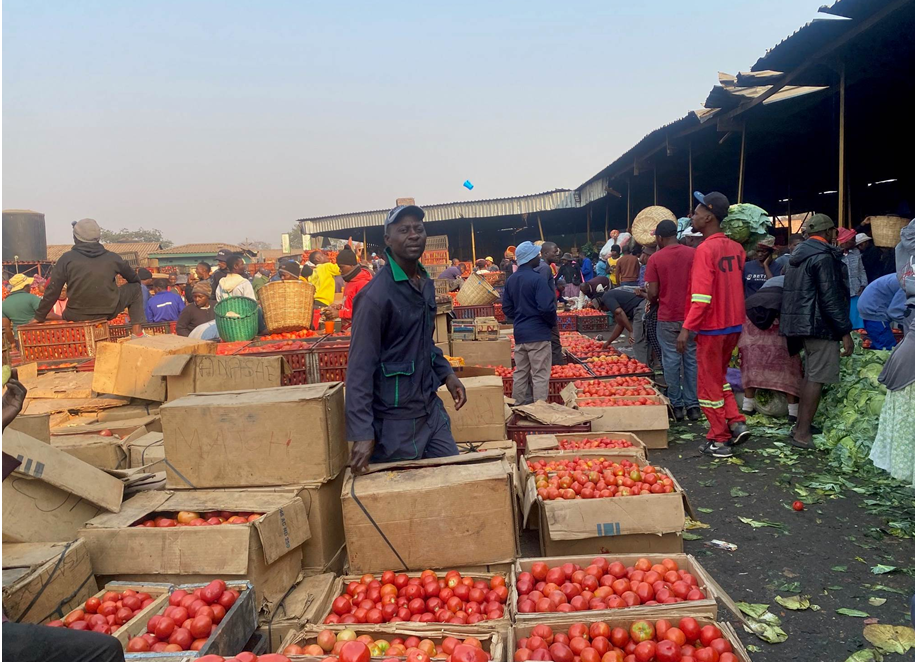
Averting food loss and waste should be a major priority for African countries
A continent that is rich with natural resources like Africa should not spend billions of dollars annually importing food. That can happen if African countries invest more in food preservation and value addition technologies. Most of the imported agricultural equipment comprising tractors and combine harvesters from Belarus, China and Russia are mainly for primary production. There isn’t much investment in secondary production and value addition where African countries are losing more jobs, potential incomes and nutritious food that can build healthy populations.
As digital technologies reshape the expectations of farmers and consumers, policy makers, extension agents, financial institutions and development organizations are being pressed to move faster in implementing evidence-based interventions that build trust and relationships. While most farming communities and mass markets have embraced digital technologies through mobile phones, they are not interested in replacing extension officers and other intermediaries with AI. They are expecting extension officers, policy makers and knowledge brokers to up their advisory services beyond just providing generic information on production of raw commodities. As information overload increases the need for real-time advice, farmers, traders and consumers are expecting more meaningful solutions along all supply chains from production to markets and value addition.
Digital solutions that work for local communities
These expectations are also directed at the formal education system including universities that should spend more time deploying technologies in farming communities and markets than be stuck in ivory towers. What is becoming clear in most African countries is that digital agricultural platforms that work for local people are built from scratch by the communities. Not imported from Asia or from the Global North. Most solutions have focused on the supply side in the form of heavy duty irrigation systems and others. But deeper challenges are on the demand side where there are no technologies for farmers and consumers who trust the informal market than the formal market. Decades of interventions by development organizations and billions of dollars spent on top down solutions are showing that much of the transferred external knowledge is inapplicable because it relies on additional resources that are not available locally.
Data and analytics as key infrastructure
What is needed is not adaptation but ground-up design by people who understand their contexts and realities. Government and funders need to treat data and the capacity to analyse data as essential infrastructure that is equivalent to physical infrastructure. Most government departments and local authorities already collect more information than they use, but without analysing it, they repeat the same operational mistakes year after year. Yet turning that dormant data into active learning is very important. Analysis and interpretation also helps organizations tell more credible stories and marshal better evidence of impact. It also reduces dependency on outside experts and keeps analytic capability in the organization long after any one grant cycle ends.
Translating raw data into a structured strategy also enables organizations to move from reactive reporting to proactive interventions, ensuring that more farmers and other economic actors receive timely support as well as avert food loss and waste. Investment in analytic capability can also yield greater sustainability and give leadership an honest picture of what is happening on the ground, for instance, what is fuelling vending. That way data becomes shared across workflows, systems, and decisions, and depends on shared layers that pull, process, and control data from across the entire ecosystem. Data, information and knowledge can also attract many diverse actors and bring several income streams. For instance, the Ministry of Industry & Commerce will be interested in a platform that tracks market performance in real time. The ministry of health and WHO will be interested in a platform that captures what happens at the intersection of food systems and public health through mass markets. Other actors want data like crop calendars before making decisions about what to grow for different markets during different seasons.
Charles@knowledgetransafrica.com / charles@emkambo.co.zw /
Website: www.emkambo.co.zw / www.knowledgetransafrica.com
Mobile: 0772 137 717/ 0774 430 309/ 0712 737 430
Leave a Reply