
How African mass markets are protecting indigenous food and culture
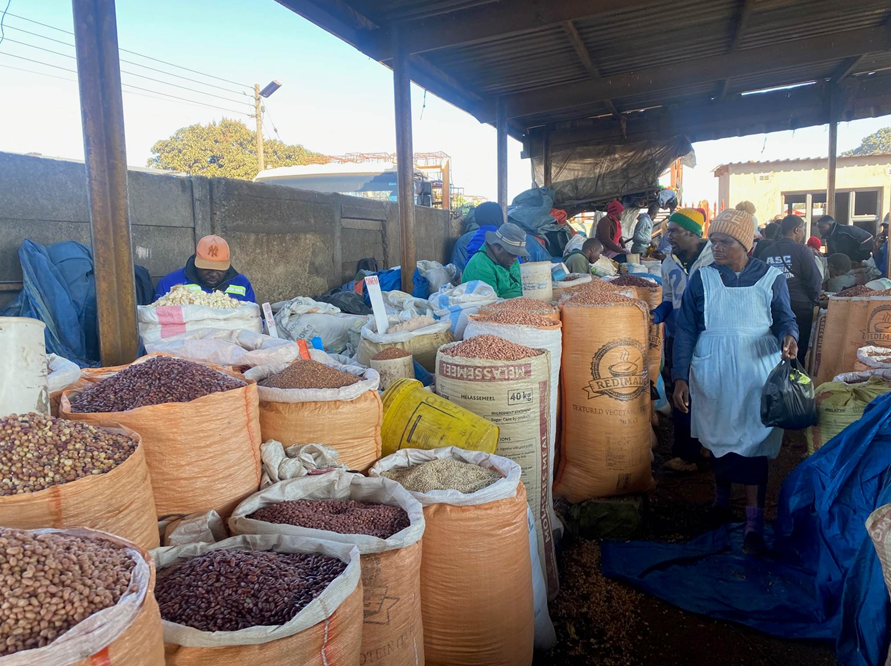
As globalization, religion and industrial food systems jostle for space in African societies, African mass markets are responding by protecting indigenous food and culture from further infiltration. Besides preserving African culture, tradition, food and identity, mass markets are sustaining indigenous food science, most of which is more experiential and not documented. Food that you would not find in supermarkets and menus that are not found in hotels or modern restaurants have a big home in African mass markets. This trend is becoming more important under a changing climate where food diversity and nutrition are a key part of resilience.
Bringing food and culture to cities
African mass markets are bringing both indigenous food and culture from diverse farming communities to cities. This is countering rapid urbanization which tries to prevent many people from visiting their rural communities and erasing indigenous memories. Urban dwellers who miss food and culture from their rural home areas can simply visit the nearest mass market. Young people who have never been exposed to indigenous food systems, tradition and identity can simply spend an hour or two in urban mass markets whose convening power draws diverse foods, traditional herbs, indigenous forests and musical instruments from different clans, tribes and micro climates. If urban young people are not connected to their origin culture, food and identity it means the next generation of elders will be disconnected from their past, culture, tradition and food systems. Many young people who are becoming professionals without having understood their tradition have an identity crisis.
Sustaining marriage customs and important cultural rituals
Through mass markets, indigenous food continues to play a key role in sustaining marriage customs and cultural rituals for many African urban dwellers. These practices would have disappeared if mass markets did not guarantee the availability of culturally-rooted foods like goats, traditional grains, indigenous poultry and indigenous vegetables. This is how mass markets have quietly remained promoters and protectors of indigenous food and culture. Indigenous fruits like Baobab fruit did not have economic and social value in many African cities before mass markets started popularizing indigenous food. Now the value of baobab fruit has increased in big cities like Harare, Lusaka, Nairobi and Johannesburg. Through the ingenuity of local food processors, the fruit is now a major ingredient in ice cream, yoghurt and other beverages including snacks and sweets. Corporates that have tried to steal and dilute indigenous recipes have not succeeded. However, the biggest threat is on the primary production side where much of the support from governments and development agencies continue to be directed at maize, wheat and other monocultures at the expense of diverse indigenous foods.
Healing the social fabric
Mass markets are now transferring indigenous knowledge systems and food systems that were previously confined to particular communities. In the case of Zimbabwe, Masawu and related recipes come from Dande, Magogoya are from Honde Valley while Harurwa are exclusively associated with Bikita. When all these foods are pulled to one mass market, people from different background become exposed to food and recipes which they did not grow up consuming. Such consolidation of a massive food basket, also strengthened by inter-cultural marriages, give mass markets a much bigger role in building resilience. Consequently, these markets are building new food economies that did not exist in the past few decades. If properly supported, this new food economy will not only give indigenous food a new profile and voice on the global food system. It will also build a strong Afrocentric food system anchored on traditional culture, rituals and other identity elements that can heal social fabric more than can be done by other markets whose operations are only transactional.
Mass markets as foundations for advancing indigenous culture and ideology
By defying many odds, mass markets have provided a strong case and foundation for advancing indigenous culture and ideology through food in a rapidly modernizing world. The fact that Christianity, globalization and industrial food systems are increasingly fighting for space in African countries means these forces are either weakening or completely replacing African culture, tradition, food and identity. Besides losing their culture and tradition, Africans are also losing their indigenous science, for example the science around spirit media which is associated with certain kinds of foods and rituals. The situation would not be worse it there were formal institutions like a school of African culture and tradition. Churches and political systems have built schools that advance their ideology and practices. Why can’t African communities do the same for African culture and tradition? In the formal education system, African culture and tradition are not considered mainstream subjects or study areas but artificially foisted as extra-curricular in a cosmetic manner. Although the new Heritage-Based Curricular in Zimbabwe seeks to correct some of these issues, schools affiliated to particular Christian denominations do not teach African culture and tradition, which are considered optional and even demonized.
Connecting indigenous food systems with culture and tradition
If African culture and tradition continue to exist without a formal institution that promotes its ideology and practices, it will continue to lose space from Christianity, globalization and industrial food systems. For instance, there is a new growing trend of building tombstones which is hijacking the way African culture and tradition recognize departed relatives through a process called kurova guva in the Shona culture or Umbuyiso in the Ndebele culture. These practices are now prevalent in cities, enabled by the availability of relevant foods, traditional ingredients and musical instruments like drums (ngoma), hosho, skin hides, cultural clay pots and indigenous artefacts.
The fact that mass markets continue to thrive in difficult circumstances is an indication that African countries need a new generation of urban planners who can ensure there are more culture centres in urban areas to compete with churches and modern musical concert centres. There is need to build a strong institution and movement that advances African tradition and culture beyond preserving sacred places. Besides promoting cultural tourism, such an initiative will connect indigenous food systems with nature, customs, sacred places, beliefs and cultural rites. Demonizing indigenous food like what is done by some Christian denominations narrows sources of livelihood in ways that also destroy related traditional practices which are an integral part of African identity.
Some of these issues can be corrected through facilitated community dialogues to discuss the following questions and issues:
- At what rate is Christianity taking over African culture and demonizing it?
- Why are Africans replacing their age-old traditional practices with imported practices?
- How can African communities use mass markets to recognize and protect their culture from being demonized? It appears Africans are failing to build their own identity story while others are building their own stories.
- Modern science has failed to explain things like lightning. In African tradition, lightning doesn’t just kill anyone. African culture always has a sensible explanation around lightning.
- All religions have embraced marriage customs like paying lobola/roora as a common tradition. But when it comes to a certain level like wedding, the church takes over.
- Is there anything wrong with our African wedding systems?
If the chief becomes a mupositori will he continue doing some key traditional rituals? If not, why?
Toward empowered communities that are able to drive their own transformation
Community dialogues that bring together different people including Christians from diverse denominations, political leaders and traditionalists can generate important transformative perspectives. Some of the issues that can be discussed include the pros and cons of Christianity as well as pros and cons of African religion. A frank exchange of beliefs can harmonize relationships between family members unlike the current situation where some family members want kurova guva but others discourage that traditional practice without providing convincing explanations. When properly done, this process will restore African social fabrics which are currently threatened by different beliefs within families and communities. Through community dialogues and conversations in mass markets, communities can cultivate mind-set change as part of enabling communities to own the process that puts indigenous food and mass markets at the centre of transformation.
Charles@knowledgetransafrica.com / charles@emkambo.co.zw /
Website: www.emkambo.co.zw / www.knowledgetransafrica.com
Mobile: 0772 137 717/ 0774 430 309/0712737430