
Mastering production is a good thing but it should not be at the expense of understanding the whole food chain including post-harvesting handling and marketing processes. When that happens many farmers and policy makers are surprised to see the cost of accessing viable markets exceeding the cost of production inputs. Agronomists and extension officers who want farmers to master inputs costs may not realize that market access costs can constitute more than 40% of the farming business. For instance, small grains might be cheap to produce but expensive to transport. That is why a market-based early warning system becomes critical in supporting farmers to select markets after considering costs of accessing different markets. Understanding market access costs can also help farmers in carefully selecting and costing value chains.
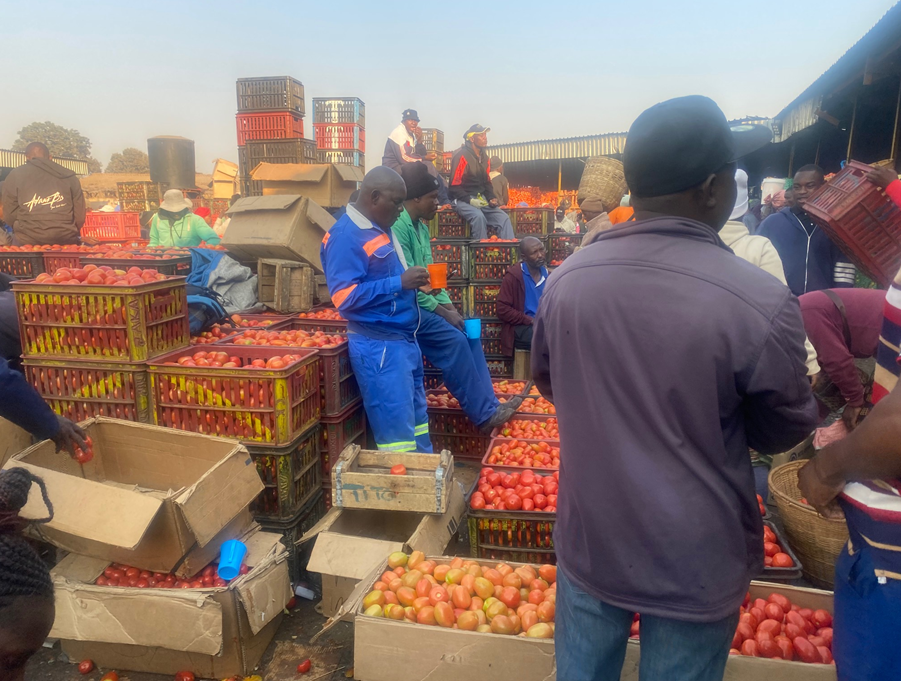
The market is redefining extension knowledge
Without visiting the market, farmers and policymakers miss a lot of agribusiness advisory knowledge that comes from the market and supply chain nodes at different points of competition. Such a fluid data system must be part of an early warning system so that farmers are always informed by market intelligence. Without a market-driven early warning system, farmers guess the cost of transporting and marketing their commodities only to find the situation different and unforgiving in the market.
When farmers don’t control costs it means any increase in costs have a bearing on their profitability. Systems have to be put in place to track and warn farmers, traders and consumers about the pending increase in costs along supply chains of different value chains especially in a changing climate. If there is no market-based early warning system, the impact of fuel prices, fertilizer and transport for farmers who farm all year round will remain unknown. Also unknown will be the extent to which all these costs affect demand. For instance, if the price of potatoes goes up, consumers may choose to forgo potatoes. But farmers who will have grown hectares of potatoes will be exposed to unfavorable market demand patterns. The only option for farmers is reducing the price to attract consumers and recover incurred costs. But in doing so, farmers have to consider decisions by transporters who also charge farmers to recover transport costs.
Who is responsible for tracking market access costs and consumer choices?
While farmers have limited choices, traders have flexible choices and can switch from potato trading to another commodity like butternut or green mealies. Food vendors can also opt for substitutes. However, systems for tracking changes in choices triggered at different points of competition and including at the farm gate are often missing. As transport costs go up, farmers end up concentrating in local markets which become their points of competition. As they move to another supply chain, the node becomes the district and province markets. All these market access costs should be tracked and early warnings provided to farmers and other actors. In cases where farmers find transport costs exorbitant, they can decide to sell to each other locally. However, this can trigger high prices in distant urban markets that have become used to depending on farmers for food. If farmers fail to transport food to urban markets, food shortages in these markets increases prices. Likewise, if the cost of supplying raw agricultural commodities to food processors increases, processing is suppressed, increasing the cost of processed products. A system that tracks all these costs is key.
Need for aggregation models that reduce costs within supply chains
Unavoidable indirect costs like transport can be early warnings for options. Capturing all these issues requires aggregation models that address cost-heavy supply chains. For most farmers in African countries, it is becoming costly to transport commodities to the market due to low quantity, long distances and state of the roads which push up transport costs. This calls for supporting institutions to consider how they can work with farmers to aggregate commodities in production areas. At the market, there should be warehouses for easy access to ensure affordable prices for urban consumers. If the market incurs high costs in sourcing, those costs are often passed on to consumers. Systems that can bring commodities closer to consumers through economies of scale for the benefit of consumers who are the drivers of demand are badly needed. This function should not be operated in development organizations working in siloes.
National resources should be used to cushion farmers against increases in access costs to points of competition. If that does not happen, more than 30% of the farmers’ expected revenue will be consumed by the cost of fuel and that reduces farmers’ return on investment by more than 30%. Even for local transport, if what was costing $1 is now costing $2, it means less income to farmers but to transporters. Every African government should assist in aggregation through relevant ministries working with farmers. Business as usual is no longer fit for purpose in these unusual situations characterized by climate change-induced droughts and food losses. Government and development agencies should put in place a structure for reducing costs because increasing costs are often an early warning of a shrinking food system and agriculture sector.
Capturing early warnings through tracking the food basket
Another early warning is around tracking the food basket. Increases in fuel costs stretch the budget as seen by how many farmers either reduce hectares planted to crops or they reduce the number of commodities they used to grow. Reducing hectares reduces the quantity while reducing number of commodities narrows the food basket. Consequently, households and markets will run out of these commodities, especially resource-heavy commodities like potatoes which will be in short supply and expensive for the majority. Nutrition dense commodities will become unaffordable, affecting nutrition and wellness. The absence of nutritious fruits can compromise the nutrition status of household members. A system that captures real time data showing how reduced hectares and commodities that are forgone impact nutrition can be a viable solution.
Charles@knowledgetransafrica.com / charles@emkambo.co.zw /
Website: www.emkambo.co.zw / www.knowledgetransafrica.com
Mobile: 0772 137 717/ 0774 430 309/ 0712 737 430