
In most African communities, traditional medicine and indigenous herbs are in integral component of local well-being. Any conversation about local food systems which does not mention the role of traditional medicine and indigenous herbs is incomplete. However, there has been limited research on the trade and consumption of traditional medicine and indigenous herbs including how these contribute to local well-being.
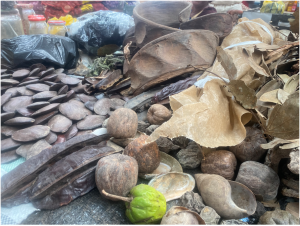
Traditional medicine as an extension of local well-being culture
While there has been an influx of Chinese medicine into African countries over the past few years, African territorial markets have continued to be a major silent platform for promoting the trading and consumption of traditional medicine. Considered informal and inferior these trends have remained under-researched, unrecognized and unmonitored when compared to western pharmaceutical products that are part of modern medical practice. Being part of the local food system and well-being has enabled traditional medicine and indigenous herbs to enact social and cultural lives of local people much better than imported pharmaceutical products.
Conversations with people in one community of Masvingo province in Zimbabwe have confirmed how traditional medicine and indigenous herbs play a very critical role in shaping local wellbeing which includes economic and mental wellbeing for consumers and traders. Increasingly, traditional medical products are now advertised on digital platforms like WhatsApp groups where they construct a worldview that is accepted by many consumers. If these products were dangerous, they wouldn’t be existing in local communities and circulating on social media platforms. The table below shows local and scientific names of more than 40 traditional medicines identified by people in one community of Masvingo province of Zimbabwe.
| Shona Name | Scientific Name |
| Chikondekonde | Euphorbia ingens |
| Chifumuro | Dicoma anomala |
| Chipwamhango | |
| Chibage | Zea mays |
| Gavakava | Aloe spp. |
| Hazviyeri | Sphedamnocarpus pruriens |
| Mavavashuro | Indigofera setiflora |
| Mubvamaropa | Harungana madagascariensis/ Pterocarpus angolensis |
| Mudhorofiya | Mudhorofiya |
| Mufufu | Securidaca longependuculata |
| Mukamba | Afzelia quanzensis |
| Muchakata | Parinari curatellifolia |
| Mufandichimuka | Myrothamnus flabellifolius |
| Mukombegwa | Crossopteryx febrifuga |
| Mupangara | Eucalyptus spp. |
| Mupfura | Sclerocarya birrea |
| Murumanyama | Cassia abbreviata/ Xeroderris stuhlmannii |
| Muroro | Annona stenophylla/A. senegalensis |
| Musasa | Brachystegia spiciformis |
| Musekesa | Pilostigma thonningii |
| Mushangura | |
| Mushayamhanda | |
| Mushoshowa | Pseudolachnostylis maprouneifolia |
| Musungwe | Maesa lanceolate |
| Mususu | Terminalia sericea/ T. stenostachya |
| Musvayanyoka | Senna singuana |
| Musvingamhara | Bolusanthus speciosus |
| Musvodzambudzi | Steganotaenia araliacea |
| Mutondochuru | Schotia brachypetala |
| Mutovhoti | Spirostachys Africana |
| Mutowa | Diplorhynchus condylocarpon |
| Mutsviri | Combretum imberbe |
| Muwuyu | Bidens pilosa |
| Muzeze | Peltophorum africana/ Albizia adianthifolia |
| Ndorani | Elephantorrhiza goetzei |
| Ndove yemadhongi | |
| Nhanzva | Pouzolzia mixta |
| Nhundurwa | Solanum anguivi/ S. lichtensteinii/ S. panduriforme |
| Rimiremombe | Sonchus oleraceus/ Vernonia colorata
|
| Ruredzo | Dicerocaryum zanguebarium |
| Zumbani | Lippia javanica |
Communities know their traditional medicines
All the traditional medicines mentioned above grow naturally in the forests. Some are near extinction due to climate change, heavy soil erosion and burning of forests. Knowledge about some indigenous herbs is siloed in individuals with some community members are destroying some herbs unknowingly. While some Christians and other religions prohibit taking of traditional medicines, activities on territorial markets confirm rising demand for and use of traditional medicines. Discussions in Masvingo province confirmed that although ignored by policy makers, traditional medicine and indigenous herbs continue to thrive. Traditional leaders such as chiefs and village headmen blamed certain religions (Christianity) and political leaders for hastening the destruction of traditional medicine and indigenous food systems. Some health workers indicated that, although they know the value of traditional medicine, their hands are tied for them to promote traditional medicines because they are employed by formal medical systems. Despite persistent onslaught from colonialism and globalization, traditional medicines and related practices are refusing to die. Rebuilding local traditional medicine should be part of heritage-based education in African countries.
Charles@knowledgetransafrica.com / charles@emkambo.co.zw /
Website: www.emkambo.co.zw / www.knowledgetransafrica.com
Mobile: 0772 137 717/ 0774 430 309/ 0712 737 430