
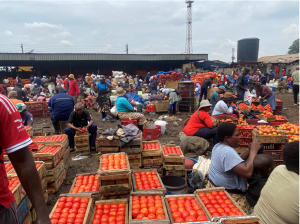
One of the major reasons why African countries are littered with abandoned market sheds intended for the poor is because these structures are set up without sufficient consultation. Those with a lot of money think they know what poor people need and quickly build what they call ‘world-class’ markets when what is needed are simple structures that preserve local culture and identities. Consultative processes involving several users such as farmers, vendors, traders, transporters and customers can inform market designs and also assist in meeting the needs of different enterprises.
The power of business profiles
Any new territorial market development requires a deeper understanding of each enterprise through profiling of every traders’ enterprises. This information is also critical for accessing finance and tailoring storage facilities like warehouses. Without evidence of what the traders are doing and for how long they have been doing it, it is difficult for government, local authorities, development partners and financial institutions to provide relevant support. As part of understanding the entire territorial market business ecosystem in order to guide internal infrastructure design and layout, the following are some of the critical details that should be collected through profiling of market traders:
Age – This information enables disaggregating market participation by age. If more youths are not owning market trading space and continue to rent, the situation should be corrected using affirmative action principles. Being inter-generational, territorial market require a deliberate quota system in allocating market space so that enough youths can pass on practices from elders.
Gender – This information is intended to reveal the extent to which different genders participate in diverse commodities. To what extent is the market inclusive from a gender-perspective? In cases where men dominate, there might be need for a 60/40 gender allocation.
Residential area (where do you stay?) – Big African urban territorial markets like Mbare in Harare are national institutions such that it is critical know which other communities are served by the market. If the collective data shows that many traders are from Epworth or Norton which is 40km from Mbare, such details will assist in re-purposing market space so that another market might even be built in residential areas where most traders are coming from. Many traders could be coming to Mbare market due to absence of market services in their residential areas. This calls for decentralization of territorial market services. Figures are critical in justifying the relevance, need and utilization of a new market so that there is Return on Investment in setting up the market.
List of commodities traded by each trader and number of years they have been in that business –This information shows the level of business that can be triangulated with age and gender as well as required support services. It also shows the maturity of a sector – for example small grains versus mopane worms trading. Number of years in business also demonstrate resilience, showing that the traders have endured droughts and shocks like COVID-19 and macro-economic shocks like inflation.
Modernization that excludes the poor does not lead to authentic development
While modernization is good, it should not exclude poor people and their norms. Consultative processes before setting up any market should try to answer questions like how do we maintain the existing relationships and networks as we put in place new infrastructure? Most African territorial markets have an embedded restaurant system where those who prepare and sell meals can supply simple breakfast to traders on their stalls in the morning and move around collecting payments around mid-morning. Traders place orders and those responsible for food catering just supply based on win-win relationships. Instead of waiting for traders to come and eat food that has been waiting to be consumed, food caterers deliver the food where traders are so that business is not disrupted. The same is done for lunch which can be served to traders upon request and payment is done end of day or tomorrow morning. These practices should be understood and embedded in any new market development because they are part of the software which keep the market humane in ways that foster resilience. The same cannot be said for supermarkets and modern restaurants.
Many traders operate their businesses based on money borrowed from friends and their own internal lending and savings. Consultative processes can unearth such existing financial systems in territorial markets because the financial landscape has a bearing on how much traders can pay for trading space. It is counter-productive for market infrastructure investors to set a standard rent of $120 per month when most traders deal in commodities with do not generate more than that figure per month. For instance, a trader specializing in grains can stock commodities worth $400 while another trader specializing in indigenous herbs may stock commodities worth $70. Such traders cannot all be expected to pay $120 per month for trading space every month. Traders should not borrow money to pay for trading space but the cost of trading space should match the value of commodities traded in the market. More importantly, any new market development should embrace evolving trends and add value to the aspirations of farmers, traders, consumers and other actors. In territorial markets packaging like plastic bags are provided for free to customers but supermarkets sell such packaging materials to customers who will have spent a lot of money buying other items.
Charles@knowledgetransafrica.com / charles@emkambo.co.zw /
Website: www.emkambo.co.zw / www.knowledgetransafrica.com
Mobile: 0772 137 717/ 0774 430 309/ 0712 737 430