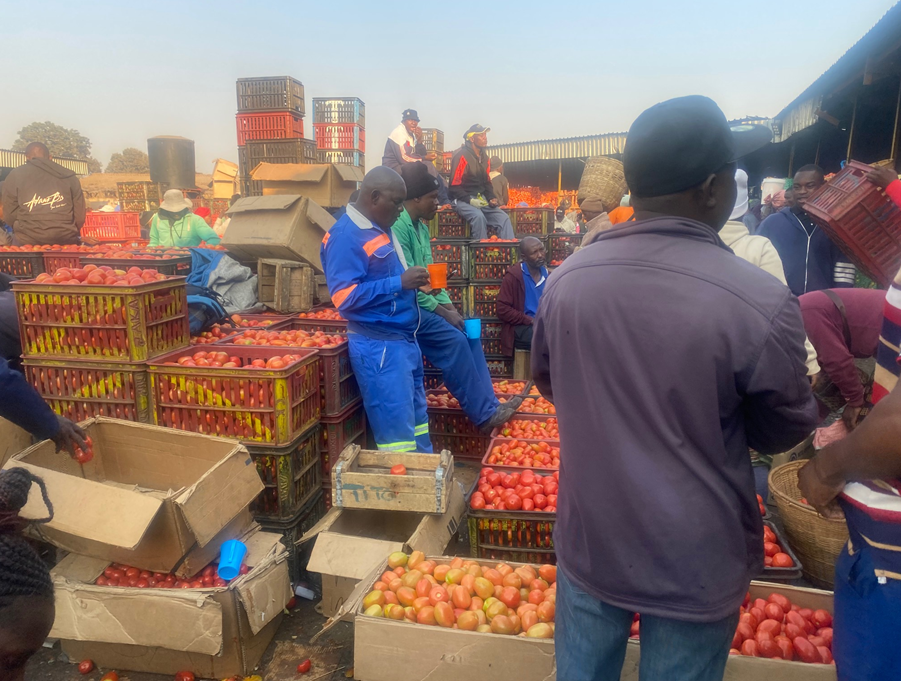
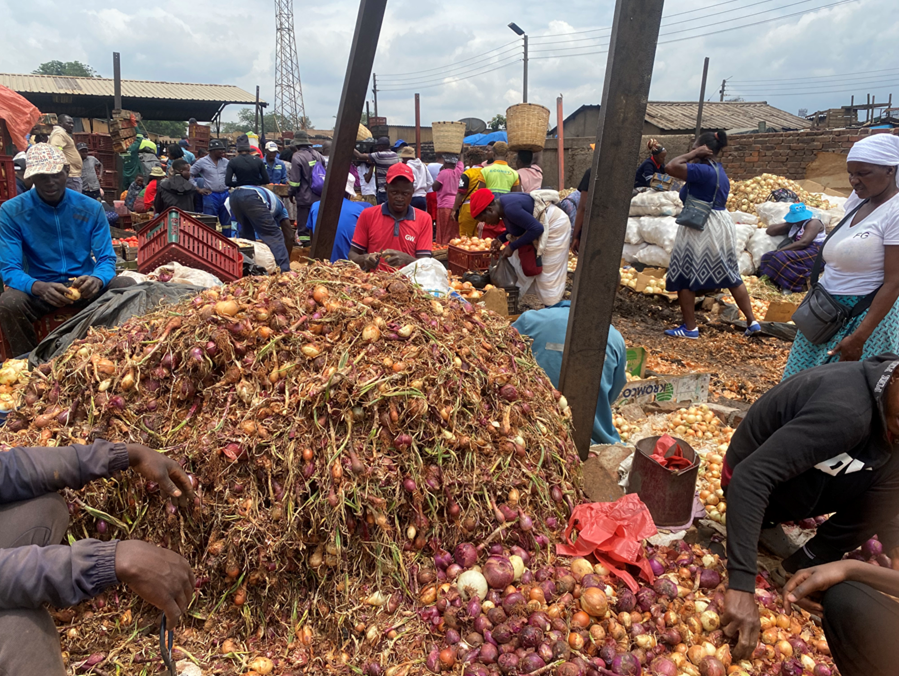
When you see traders in African territorial markets like Mbare in Harare selling Kapenta fish (Matemba), soya chunks, plastic packaging, potatoes and eggs, chances are that those traders don’t own those commodities but have been supplied by a bigger trader on credit. The commodities are co-owned by the trader and the supplier, based on long-term relationships. Only a few traders like Pardon Matunga can bring a truck of Matemba from Binga, Kariba or Zambia into Mbare market. When the consignment arrives, Pardon distributes the commodity to second level traders on credit. From a 50kg bag of Matemba, Pardon wants to earn USD280 and does not care if the trader earns an extra $100 as long as he gets his USD280 within two weeks so that he can go back to the source and bring more. The second level traders pay Pardon any amount as s/he sells until the loan is paid off.
It is these kinds of undocumented relationships and embedded business models that keep African territorial markets thriving. Companies that manufacture soya chunks and indigenous beverages like mahewu have mastered the power of these informal marketing channels. The companies supply soya chunks and mahewu to traders and vendors every morning on credit and the company official returns to collect payment end of day. What is not sold is taken to the company for safe-keeping and brought back the following morning as part of a fresh deal. This practice has also been copied by farmers and companies that manufacture plastic packaging and ropes that now work with traders in the same manner. Chinese companies that manufacture electric gadgets and solar panels also supply Mbare traders on credit. Tuckshops are booming because they have a similar relationship with manufacturers or suppliers. After Mbare retail market was burnt by a mysterious fire on 8 October 2023, traders who had built strong relationships with suppliers, received new supplies like chunks, plastic packaging, ropes, grains and others on credit. That fresh start enabled them to bounce back into business quickly.
Importance of understanding socio-economic relationships
The above rea-life stories demonstrate the importance of government and investors understanding how self-organized informal economies work before prescribing market infrastructure and taxes. How much tax or rent can a second level trader who earns $20 per fortnight from a 50kg bag of Matemba which s/he received on credit pay and still remain in business? This is the kind of question market developers should answer before expecting traders to pay $120 per month rental fees.
Evidence from African territorial mass markets like Mbare indicates that informality is not just the art of economic survival but also a response to inappropriate policy-making. Instead of focusing on how to liquidate informality as a whole, governments and policy makers should think about addressing the negative consequences of informality such as poverty, vulnerability and instability. As shown in the examples above, informality is an immense reservoir of creativity and innovation. In fact, formality and informality might not exist without each other because they are interconnected and mutually supportive of one another. That means the state should desist from proposing regulations which strangle entrepreneurship. A better grasp of informality can reveal alternative ways to improve state and business performance, improve regulatory performance or predicting market behaviours with implications for taxation, tax morale and willingness to comply with tax legislation.
Formal structures are just one component of a more complex economic system
Governments and financiers might be obsessed with building formal structures like shopping malls but what is clear is that formal structures are only one component of a more complex economic system. Economies of the Global South should be understood beyond their mere economistic and monetary aspects. Policy makers should invest in understanding the complex and entangled relational framework in which poor people are embedded which also allows them to survive, build trust and social networks. These things come entangled and cannot be separated from one another. When people are trapped in unstable and precarious conditions, social relations become dependent on indebtedness, help and support networks that function beyond mere redistribution of cash. They generate both dependency and reciprocity leading to the consolidation of strong ties between marginalized and weak actors. In such situations the opportunities created by entrepreneurship may vary in significance and meaning.
When the absence of state support makes conditions unfit for orthodox economic development, business is no longer about growing and generating but is instead about survival, social bonding and invention. The meaning of success is widened and comes to include the capacity to generate revenues respecting social rules and obligations, gain esteem or respectability, and a blurring of the boundary between domestic and professional areas. These insights can only be gathered from being part of everyday contexts in which citizens negotiate their relationship with the state on a daily basis.
Informality as resistance to western neoliberal institutions
While African policy makers seem to see informality as a hindrance to the expansion of modern/Western institutional structures, to what extent are the imported western structures relevant to African economies driven by indigenous commerce? The growth of informality indicates the existence of alternative economic models that can also work to the advantage of poor people who thrive more on equality and justice. Trust networks built in territorial markets and MSMEs are fuelling the evolution of urban planning that is rooted in African values and relationships. A deeper understanding of informality can lead to the development of an overarching framework that takes into account everyday governance and the role of informal practices and actors in the construction of a new socio-economic order.
After realizing that they are on their own, actors in informal African economies have been quietly conceptualization alternative socio-economic systems different from capitalist neoliberal approaches that only focus on economic profits. Territorial markets and informal economies are building frameworks that embrace social, cultural and environmental needs of populations that have been neglected by orthodox economic and economic policies for decades. What is also clear from African countries is that informality is not transitory but here to stay. Therefore, informality is worth continued efforts at theorization and analysis. Informality will not gradually disappear with the emergence of modernization. It can be domesticated and tamed but not liquidated completely.
Charles@knowledgetransafrica.com / charles@emkambo.co.zw /
Website: www.emkambo.co.zw / www.knowledgetransafrica.com
Mobile: 0772 137 717/ 0774 430 309/ 0712 737 430