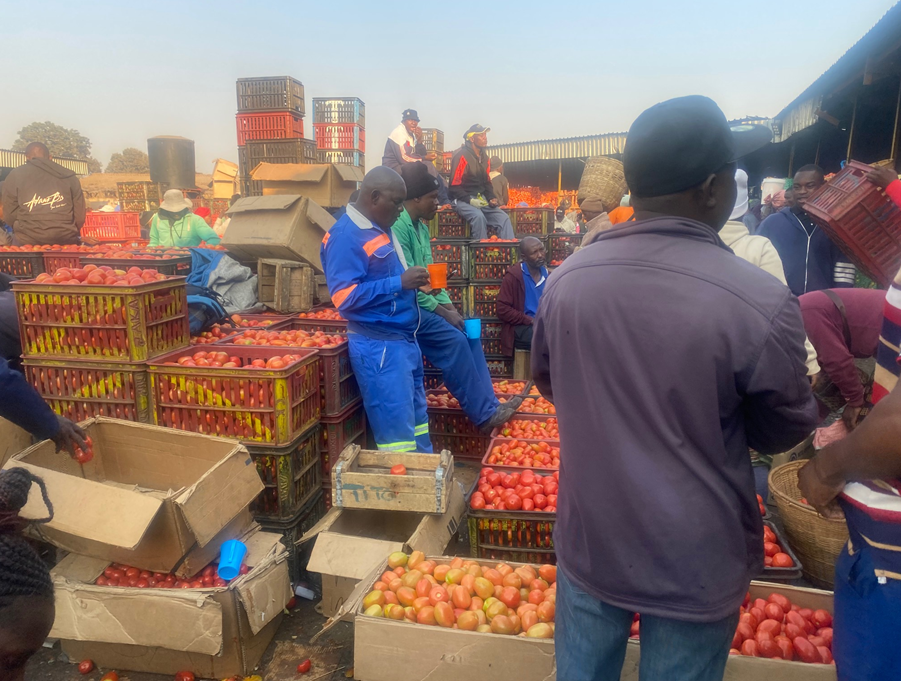
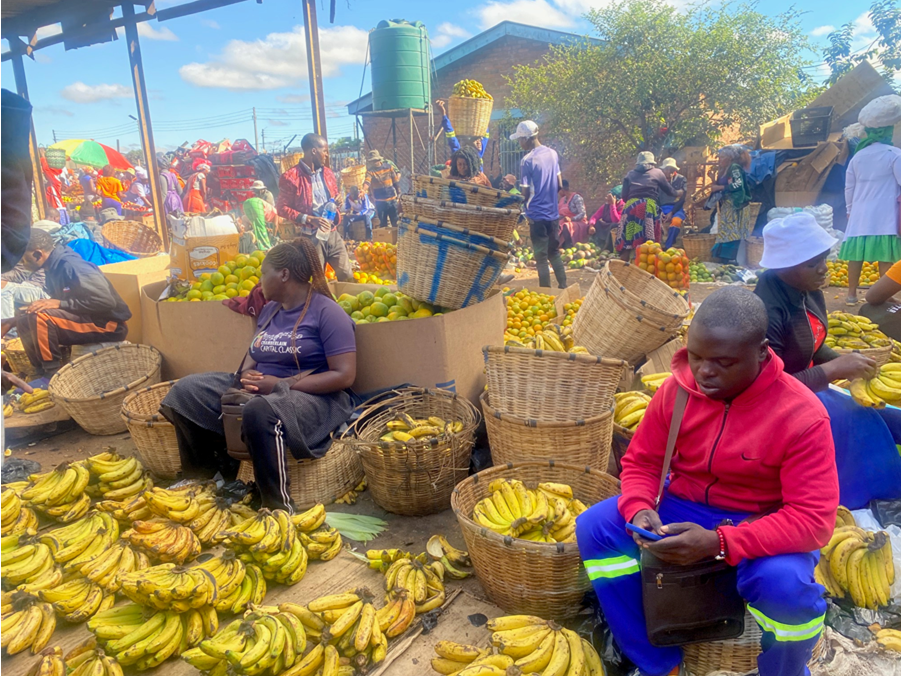
In addition to being a source of nutrition and income, African territorial markets provide strong evidence bases for building local food baskets. Such knowledge bases can inspire the young generation to embrace local consumption. More importantly, the evidence can strengthen counter-narratives against industrial food systems. Each documented food basket can also function as an investment guide for local communities to use in attracting investors into their food system.
Lessons from how food is classified in territorial markets
From an outsider, territorial markets may seem disorganized but there is order in how food commodities are positioned in the market. Some of the classifications are influenced by consumer buying patterns while others are informed by culture, tradition and ethnic cuisines.
Simple food
Every African territorial market has simple food that requires simple preparation. That includes food that is consumed in a raw state like several indigenous fruits which consumers are allowed to taste for free by enterprising traders. With enough capacity and curiosity, each community can identify its simple food and determine how much is disappearing or how much is completely new, coming from elsewhere.
Recipes, food rations and diverse ways of cooking/preparation
At the market are people with knowledge about different ways of cooking/preparing food like grilling, fermenting, smoking and others including different meanings in local culture and languages.
Dishes and moments of consumption
Communities, farmers and traders in territorial markets have abundant knowledge on the pros and cons of different dishes including how they are preserving indigenous food preparation knowledge. There are several undocumented methods of converting indigenous fruits and vegetables into beverages and diverse menus. For instance, territorial markets in Cameroon have several cassava-centric dishes and menus including Tchu (leaf); Ndole (leaf) and Couscous gombo with okra soup and fish. The OKOK vegetable is given different name according to region or tribe. In the central region it is called okok by the Ewondo, Beti and Bassa people and their respective languages.
Beverages
Transforming foods into beverages is often a very knowledge-intensive practice that adds value and increases the shelf life of raw commodities. While small grains-driven drinks are numerous in many communities, local researchers can be trained to document how many indigenous fruits are being processed into beers, wines and juices as well as how many indigenous beverages are being infiltrated or diluted by exotic ones?
Indigenous food preparation tools
African communities have countless indigenous food preparation tools that can also be found at territorial markets in big cities like Accra, Abuja, Yaounde, Kinshasa, Kigali, Cairo, Addis Ababa, Lusaka, Maputo and Harare, among many other areas. The tools include traditional tools used to thresh small grains, pound tubers, ferment, winnow and utensils like clay pots, gourds and others.
Edible insects and sugars
A single community or market can have more than 20 different types of edible insects ranging from those that fly, those that live in the ground and those found in forests hanging onto trees. A lot are found at harvesting time – some are in the ground while others will be flying around. Honey, sweet reads and sugar cane are part of sugars that are often part of every territorial market.
Medicinal elements
In most African communities you cannot talk about food without talking about medicinal products and traditional herbs that are an integral component of local wellness and wellbeing. In Masvingo district of Zimbabwe, 57 local medicinal products were recently identified together with their uses through community dialogues. Big territorial markets like Mbare in Harare and Nsam in Yaounde have vibrant traditional herbs sections.
Rites and myths
This is about cultural rites, rituals and myths around food. For instance, some foods are used during traditional ceremonies and goats are used for marriage customs. These practices are part of Indigenous Knowledge Systems (IKS) and, in the absence of supportive policies, can easily become extinct. Some Christian churches are demonizing indigenous food in ways that undermine production and consumption of such foods. When there is no demand from the young generation, there will be no demand or market in the next 20 years. Local people also have a lot of knowledge and practical wisdom on which food should be given to infants and young children as well as types of food that can be prepared at specific ceremonies or at certain rituals like initiation.
Quotations/ proverbs/poems around food
African communities and territorial markets have several proverbs, idioms and poems about food, most of which have not been documented. Fruitful conversations can start with finding out from the community how they define food as indigenous or exotic from their own perspectives. With good facilitation, communities can collectively list their food including how it is produced. They can also brainstorm trends around the food basket – is the local food basket expanding or shrinking? Why are few indigenous foods being processed? On the other hand, how can communities ensure processing or value addition does not trigger over-exploitation of indigenous food? Most of these questions can be answered through community dialogues decorated with proverbs, poems and songs.
Each food category has an underlying story
There is a story behind each food category as food travels from production to consumption. The underlying story answers a question like what journey does food travel from its raw state to finished products? For instance, most indigenous fruits are consumed in a raw state. When these fruits are out of season, they are not available for consumption. If the food journey shows that 90% of indigenous food is at simple food category, what is the implication for advocacy? If there are only two dishes, what is preventing indigenous fruits from finding their way into several products like cakes? Using dialogue to answer such questions can help communities to be conscious of their food systems. The good thing is that the African food basket can be contextualized. African leaders should be motivating the documentation of indigenous food systems starting from territorial markets back to communities from which every food commodity is sourced or originates.
Charles@knowledgetransafrica.com / charles@emkambo.co.zw /
Website: www.emkambo.co.zw / www.knowledgetransafrica.com
Mobile: 0772 137 717/ 0774 430 309/ 0712 737 430