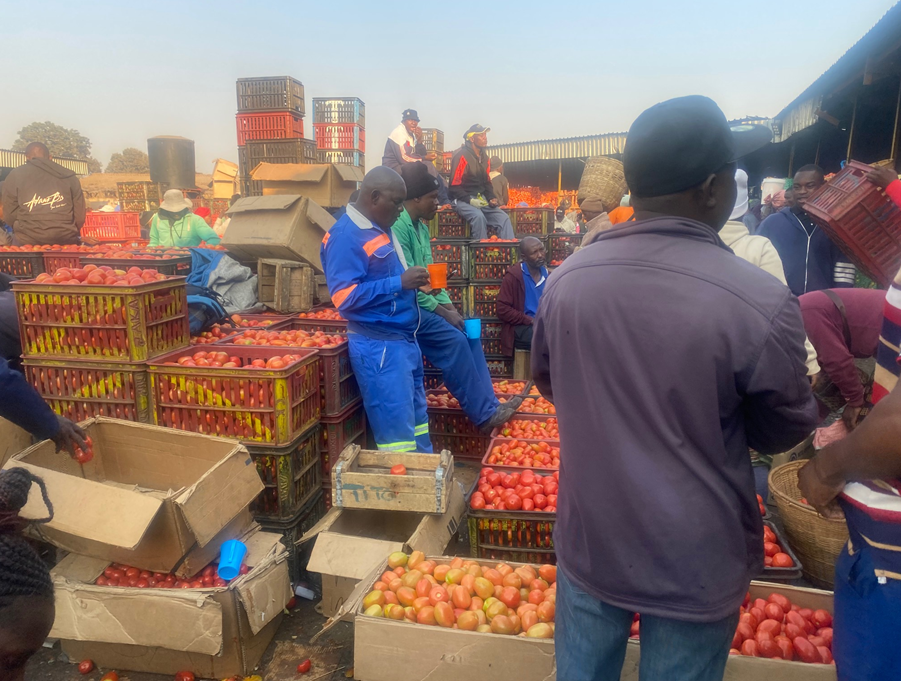
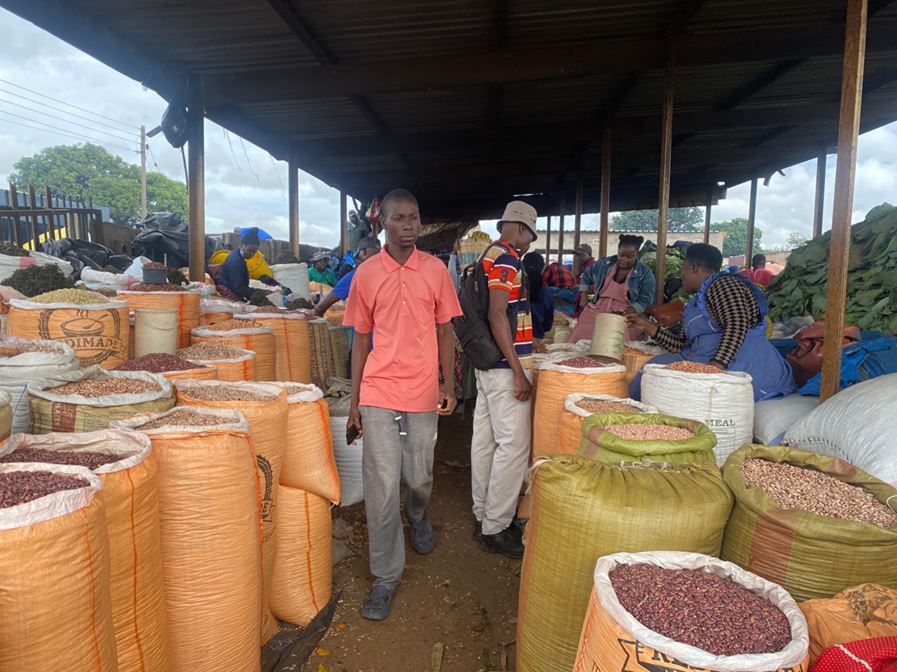
What makes African territorial markets different from other markets is that they are not just about financial transactions. They are masters of conversational commerce and reliable interfaces for discovery, comparison, recommendations and informed decisions. The diversity of commodities shapes what consumers can buy while conversations shape how consumers buy what they want. Whereas formal markets like supermarkets use swiping machines to harvest information about buyers, territorial markets create conditions that strengthen camaraderie between food producers, traders and consumers.
Exceeding consumer expectations through undocumented rituals
Conversations give African markets unique ways of making consumers feel special, respected and honoured through food. Unwritten but predictable rules like determining when the market opens and closes build the confidence of users like farmers and consumers and satisfies their schedules. Having worked the same way for many years the markets have built a strong sense of stability which has seen behaviours by market actors becoming institutional memory. This has seen the markets surviving shocks like droughts and pandemics like COVID19 better than corporates.
If there was no trust between farmers, traders, food vendors, transporters and other market actors, mass markets would not be resilient. Consistency in how actors work together signals reliability. For instance, most traders get commodities from farmers on credit because farmers know that the traders do not have the money to pay for a lot of commodities at once. However, the traders are good at marketing and getting money from consumers for the benefit of both farmers and traders. Without trust, farmers would not release their commodities to traders and consumers would stay with their money. Farmers who grow 30-60ha of cabbages, potatoes and tomatoes have to loan commodities to traders who sell to consumers and then then bring the cash to pay for the previous consignment. The trader collects the second consignment after paying for the first one and the cycle continues. For farmers and traders getting into the market for the first time, the territorial market is a space for creativity without judgement. That is how new trading knowledge is acquired. No business text book. Shared behaviours create strong bonds that enhance a sense of belonging. Ordinary food vendors are treated with respect because they are internal investors.
The wisdom of treating seed and food as one entity
Through conversational commerce and fluid knowledge exchange, African territorial markets share the wisdom of reproducing and strengthening the natural relationship between seed and food. That is how they clarify differences between agroecology and industrial food systems. They demonstrate multi-purpose uses of commodities from seed to food and to beverages, among other uses. While the industrial food system has tried to mimic this relationship, the main difference is that the industrial food production system has delinked seed from food by producing seed in laboratories and preserving it with chemicals. Industrially-produced and chemically-preserved seed cannot be retained for reproduction. For instance, when industrial maize is harvested, the seed cannot be replanted to produce more food. In In the same vein, vegetable seed cannot be retained from hybrid cabbage, Onion and many other industrially-produced commodities that have been separated from original seed. After consuming oranges or apples, farmers who decide to plant seed from these fruits do not harvest anything. The industrial system has also designed some varieties only for processing.
In African territorial markets, agroecology and indigenous practices do not delinked seed from food. For instance, seed harvested from indigenous vegetables like Nyevhe, Mowa, Mutsine and others can be easily sold/bought for reproduction without laboratory intervention. Finger millet, pearl millet, sorghum, yams like magogoya and many other indigenous commodities can be planted as seed and harvested as food. In fact, seed and food from these commodities have similar characteristics in terms of shape, size, colour and other natural features.
The multi-purpose nature of finger millet implies it can be consumed in a raw state, can be processed into mealie-meal and can be fermented into traditional beverages. In addition, finger millet and other small grains are sources of several varieties of traditional beverages ranging from less alcoholic mahewu to different kinds of beers as determined by multiple purposes. Mahewu can be a household drink for a family while some beer can be consumed at community functions such as nhimbe used for collective planting or harvesting of crops. Other kinds of beer are part of cultural functions such as bira and rainmaking ceremonies where industrial drinks are not appropriate.
The seed and food story of rapoko and other traditional grains is similar to Bambara nuts and groundnuts where seed from food cannot be differentiated using the naked eye. More importantly, the naturalness of Bambara nut does not require additional industrial recipes in order to retain its taste. Boiled or roasted Bambara nut remains the same food. Likewise, the multi-purpose nature of groundnuts implies some can be consumed as raw or roasted into mutetenerwa that can also be consumed as relish. Traditional processing of groundnuts produces peanut butter which also has multiple uses on the journey from seed to food.
Charles@knowledgetransafrica.com / charles@emkambo.co.zw /
Website: www.emkambo.co.zw / www.knowledgetransafrica.com
Mobile: 0772 137 717/ 0774 430 309/ 0712 737 430