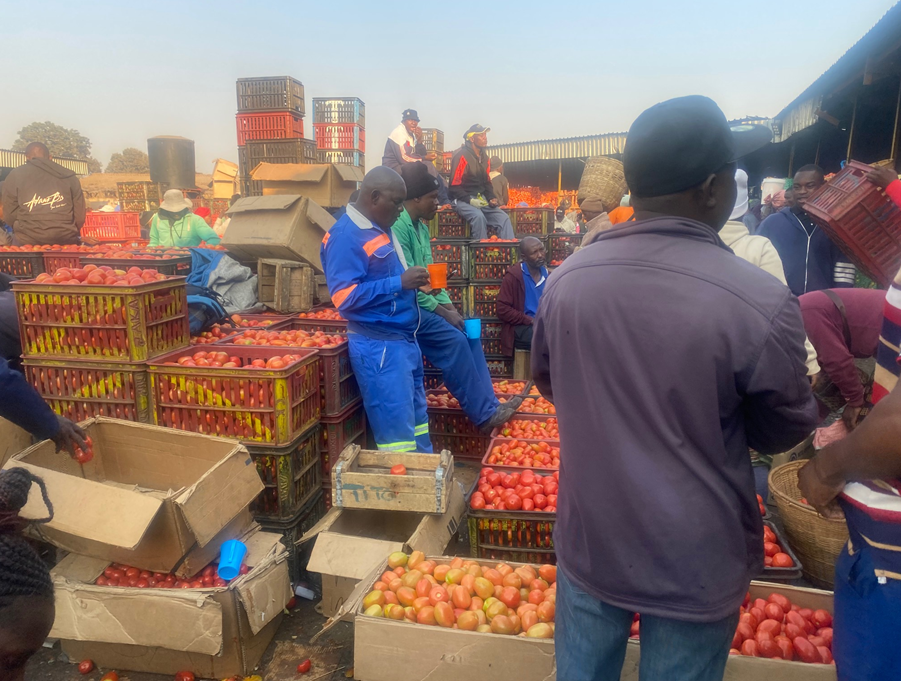
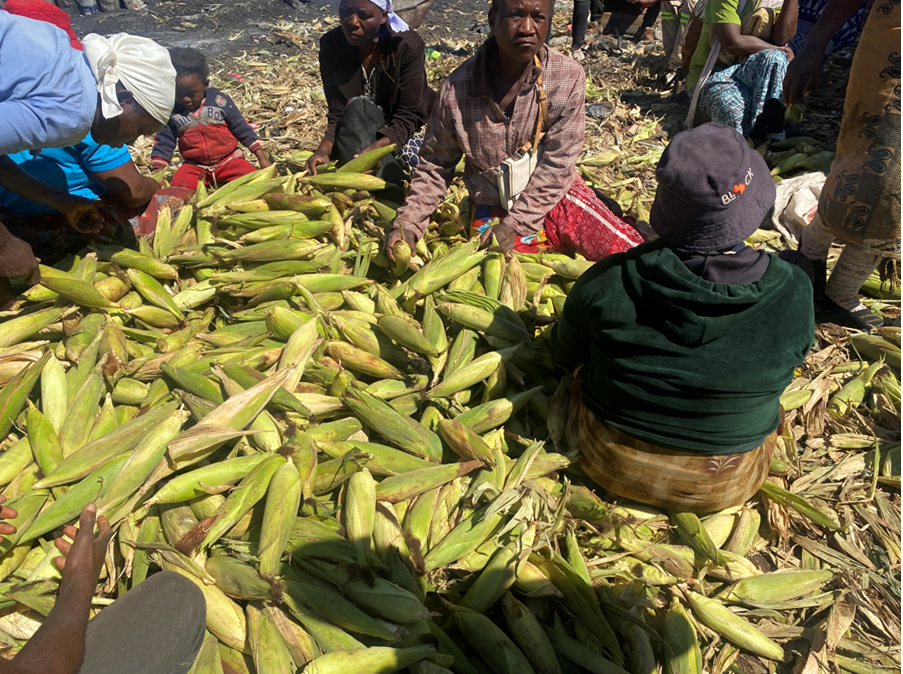
While collecting statistics through crop and livestock assessments is necessary, the most important missing link is interpreting and analyzing what is happening to different value chains. Such interpretations and analyses are the domain of crop and livestock specialists not statisticians. Also important is capturing and analyzing market trends in order to show the return on investing in different commodities and value chains. For instance, what is happening to diverse horticulture crops, tubers, indigenous fruits in terms of production, consumption, sales, costs and profits?
Cultivating demand for analyses and interpretation
In the absence of demand for analyzed and interpreted data, data providers end up providing what they think policy makers need to know as opposed to what farmers need to know. Who needs to know how many women and youth are participating in markets? Who would be interested in losses associated with different transport services for various commodities? Answering these questions requires stimulating demand for such evidence so that it informs better decisions.
Ideally, every African country’s ministry of agriculture should have a department responsible for consolidating agriculture and food systems trends including what is emerging from other organizations working in food systems like development agencies. Analysts and interpreters can also package information into usable insights and real-time policy recommendations. Such data can guide timely preparedness and early warnings whose absence may be a threat to food security. Insights from the analysis can include how to handle bumper harvest of crops, fruits and livestock as well as controlling market prices through supporting farmers with temporary warehousing facilities so that farmers earn better income when supplies to the market are staggered.
Markets also need information from production areas. It is easy for large scale farmers to record hectares and yields from their individual farms and share such information easily with processors, supermarkets and other value chain actors. Who can do that for scattered smallholder farmers? Communities can only enhance their resilience when they are shown information on their performance especially in the market. Data from the market can show income generated by small grains and indigenous fruits like baobab and mangoes. Although farmers sell small volumes like buckets individually, collective information like the total volume from their community will shock them into action, for instance, if data shows that Mwenezi district sold small grains worth two million dollars last year.
Controlling data flows enables understand the agricultural landscape
The more the ministry of agriculture has control over data, the more it understands the agricultural and food systems landscape. It should be interested to know middlemen who are buying commodities in particular districts and where they are taking those commodities. The ministry of agriculture should also be interested in information on remittances that are directly supporting agriculture in communities and districts. No one is capturing such information. Too much concentration on production means no one is capturing data on whether farmers are making a profit or not. Yet it is critical to support and position smallholder farmers through profiling and tracking their collective community businesses.
From quantity to quality
African economics are no longer much about statistics (quantity) but quality (nutrition). Such soft and embedded sets of information are now more valuable. For instance, if conclusions are reached that tobacco has earned three times more than the previous season, the question remains, has the farmer earned three times as well? Valuing at national level may give a global figure but, collectively, farmers may have earned 30% less because more of them produced the same commodity and knocked down prices. Farming communities deserve to know some of these critical details which can be effectively gathered if governments have systems for tracking supply chain nodes. Instead of stopping at production, the ministry of agriculture should follow up to see what happens when the commodity gets into the hands of the middlemen, supermarkets and processors.
Towards evidence-based negotiations
Is comparing production costs and the selling price the only way we can see if the farmer has benefitted? If a farmer gets 10% profit after selling small grains, will the farmer be happy if, after all the costs, data reveals a bucket of small grains earns someone 1000% interest comparing to what s/he got? Answering such questions has been made difficult data collection and analyses systems that many African countries adopted from the colonial era where farmers were not expected to know where their commodities were going. Even if they produce small volumes, farmers deserve to know the final destination of their commodities. Government should assist farmers to use evidence-based negotiations through extension services by officers on the ground seating down with farmers.
Negotiation should not be once off because commodities are always in transit or moving. Farmers can be advised to push up the price of groundnuts by 10% toward the rainy season when demand for seed increases demand. In most cases, farmers have no basis for comparison when pricing their commodities. For instance, it is difficult for them to compare the price of small grains in Mutoko and Bulawayo unless markets provide the information. Extension services should not just collect data without timeously processing it. The relationship between departments should be the relationship between crops and livestock for the farmer. In the ministry of agriculture, officers responsible for crops often go to the farmers on their own, livestock the same as well as forestry people. All visit the same farming community separately.
At the moment there is no level playing field where demand and supply meet to determine prices fairly. Even if farmers try to come up with prices on their local communities, it is difficult because they are not aware of prices in other areas with which they are competing in producing the same commodity. That is why the supply chain is now being controlled by opportunists who are determining prices for the desperate farmer and the end consumers who are also desperate for food. Consequently, the difference between the selling price and the buying price is very huge. The farmer is getting very little while the consumer is enduring very high prices. Why should opportunists continue reaping abnormal profits at the farmers’ expense?
Charles@knowledgetransafrica.com / charles@emkambo.co.zw /
Website: www.emkambo.co.zw / www.knowledgetransafrica.com
Mobile: 0772 137 717/ 0774 430 309/ 0712 737 430