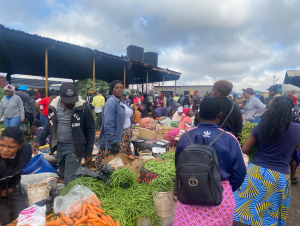
If there were no territorial markets many food ingredients and related recipes would have disappeared. Besides keeping rural and urban areas connected through food, African territorial markets are at the forefront of protecting food cultures. When Africans now living in the city want to remember what they used to eat growing up in rural areas, they just visit the nearest territorial market. The same way knowledge disappears if not used is the same way some food cuisines become extinct when raw materials are missing for too long. Territorial markets provide most ingredients.
Every mother is a chef
While modern food systems and the hospitality industry present professional chefs as the main influencers of consumption patterns, African mothers are the custodians of local food culture and cuisine through selecting the right ingredient from territorial markets for home cooking. By providing diverse food ingredients in line with particular seasons, territorial markets are quietly advancing home cooking. In so doing, territorial markets are protecting food cultures against infiltration and a fast-food culture.
Urban girls and young mothers who want to learn about how certain yams are prepared the traditional way are harvesting that practical wisdom from elders who have been working in territorial markets for decades. This is also how territorial markets are preventing indigenous food cultures from being erased. Absence of research and development about indigenous food implies does not mean such food practices do not exist. Why is there more data about western food than local food? Indigenous food is facing terrible discrimination from policy support as seen by the abundance of data and studies on western food but less on indigenous food. Absence of data is another form of violence against indigenous food, cultures and identities which territorial markets are correcting.
Much of the investment going to modern irrigation technologies advances imported food systems at the expense of indigenous fruits. A typical example is in the horticulture sector where in most African countries indigenous fruits are not receiving the same support that is given to citrus and other western fruits. Territorial markets are challenging this negative trend by providing space for trading of indigenous fruits some of which are now finding their way into beverages. Cabbage, carrots and other imported vegetable hybrids are invading several rural communities but territorial markets are providing space for indigenous vegetables to compete for the same consumers with imported hybrids. The fact that policy makers promote broiler chickens and layers has not stopped territorial markets from marketing indigenous poultry which many urban consumers are beginning to prefer for health and wellness reasons. Territorial markets are trying to make sure that consumers who want indigenous food get it whenever they want it so that they do not go back too exotic food.
Remembering forgotten indigenous ingredients through territorial markets
African grandmothers who were born in rural areas but lived much of their life in the city are using territorial markets to remember some ingredients which their mothers and grand mothers taught them. Pride in going back to the culinary past is on the rise as Africans try to rediscover their roots through indigenous food. Seeing indigenous fruits, vegetables and herbs in the territorial market is now like finding a lost member of the family. Protecting indigenous food is now like preserving a fundamental aspect of culture and identity like a totem. Protecting natural wonders and heritage sites should be accompanied with protecting traditional food that was part of people who lived with those sites. For instance, people who built Great Zimbabwe had their own food systems which have to be researched and preserved.
Food as part of local language
Territorial markets are showing that food is more than carbohydrates, proteins, fats and sugars. Food is a language and culture through which people communicate from generation to generation. That is why food should be protected the same way languages are protected. Cameroon has 265 local languages and that means it has more than 265 food systems and cuisines most of which are found in communities and urban territorial markets. The population of Cameroon is approximately 50 million who consume several food groups. Many meals are around cassava and cassava leaves; Tchu (leaf); Ndole (leaf); Okra and many others. Another famous meal is called Couscous gombo made up of fufu or cassava with okra soup and fish. The Okok vegetable is given different names according to region or tribe. In the central region it is called Okok by the Ewondo, Beti and Bassa people and their respective languages. In the eastern region it is called Kok kok while in the North west and South-west it is called Eru by the Bafut, Mankon and the Bayangui. In Littoral or Duala region it is called Ekoke. Yaounde, the capital city has more than 10 big territorial markets including Nsam, market, Ekounou market and Mokolo market where indigenous food culture is promoted and preserved.
Handing food cultures to future generations
Many African urban mothers want to see their children moving from fast foods to indigenous food but the main challenge is that some of the ingredients are only available during a particular season. Now that many countries control all their natural resources such as land, what prevents them from supporting the production of indigenous food so that ingredients are available every time? The same amount of money going toward promoting tobacco, Irish potatoes and other exotic foods should be directed to preserving indigenous food. There is no doubt that food helps people to maintain a strong sense of cultural identity and cohesion. It allows communities to appreciate themselves every day and reaffirm their connections to each other and to territorial markets. The most important dialogues in African territorial markets are about food – sources, varieties, recipes and diverse flavours. A culture of documentation will ensure most of these critical conversations are available to the current young generation and future generations so that they build careers around local food.
Charles@knowledgetransafrica.com / charles@emkambo.co.zw /
Website: www.emkambo.co.zw / www.knowledgetransafrica.com
Mobile: 0772 137 717/ 0774 430 309/ 0712 737 430