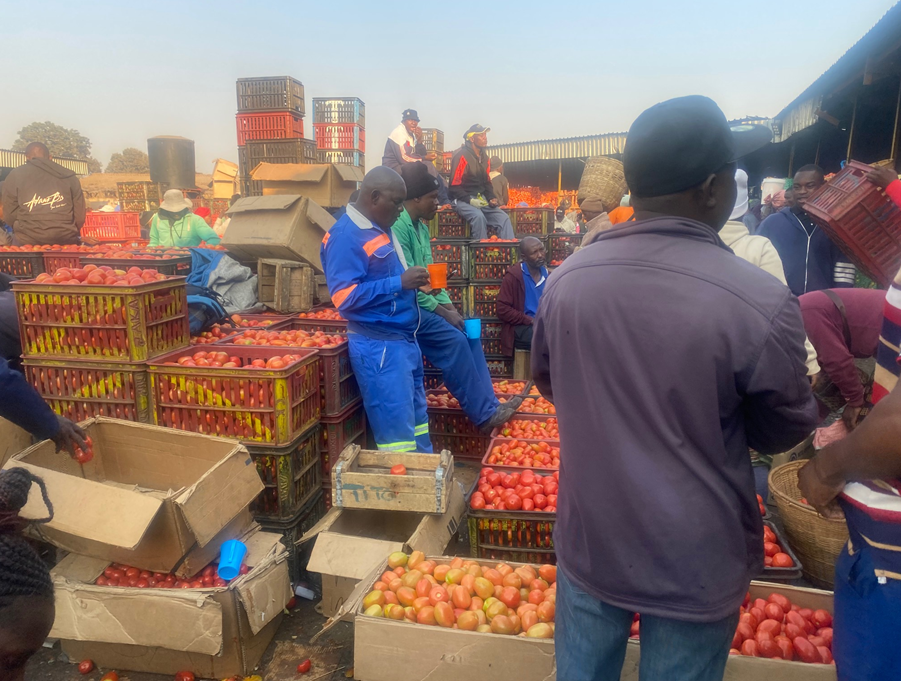
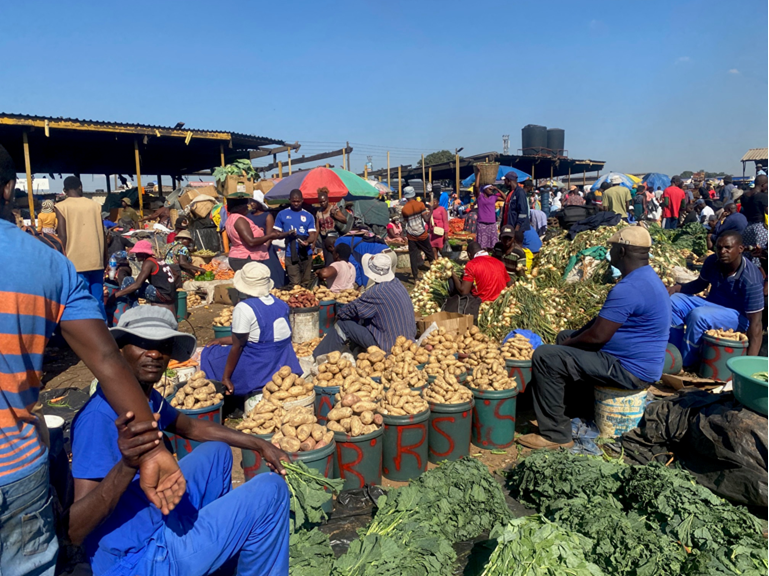
With frequent reports El Nino weather phenomena across the world, signals from mass markets are becoming major sources of critical knowledge for adaptation to climate change. Increasing climate variability, shifting market dynamics, cross-border trade complexities, and the growing scale of informal markets demand a more advanced, integrated, and responsive early warning system. The rich intelligence embedded in market signals should find its way into decision-making processes.
Converting everyday market observations into structured intelligence
Every African country needs an early warning system that can unlock the value of informal market signals and transform everyday observations into structured intelligence. Unlike periodic reports from global organizations like the Famine Early Warning System (FEWSNET) that are published when a lot of daily changes have occurred, a market-based fluid early warning system can inform climate services, food security planning, and policy decisions in real-time. That way, the early warning system becomes not only a tool for risk reduction but a strategic platform for improving resilience, reducing losses, and optimizing opportunities across the entire agriculture and food system landscape. In most African countries, agriculture and food systems are increasingly characterized by diverse commodities and actors. Under these circumstances, a consolidated platform that can help in maximizing opportunities and minimizing losses is badly needed. The fact that commodities move together with information and knowledge implies that when commodities are scattered, information and knowledge is also scattered in ways that make it difficult to account for gains and losses.
Addressing gluts, shortages, dry spells and disease outbreaks from the market
When properly backed by real-time alerts, the market-based early warning system can address fluid challenges like gluts and shortages before they go out of hand. It can also monitor disease out-breaks as well as the effects of dry spells and inflation on value chains. The system will also strengthen supply chains by rationalizing food distribution and roles of different actors. It will also prevent the concentration of value chain actors and talent in a few value chain nodes like production when some key players and skills are badly need along entire value chain nodes such as logistics, post-harvest handling, quality control, preservation, processing and marketing. Formalizing several economic activities to introduce best practices can be enabled by the market-driven early warning system.
Facilitating fairtrade and financial inclusion
Some of the major roles of the early warning system will include facilitating fair trade through setting a pricing committee responsible for demand management. While food vendors can advise on prices prevailing at the consumption level, the early warning system’s tracking mechanism will identify unfair trading instances like arbitrary over-charging. Currently consumers and vendors have nowhere to complain if they are over-charged. Likewise, farmers have nowhere to complain in cases where they are over-charged by transporters and local authorities. The cost of transport has become a major challenge for most farmers distant from the market. Additional benefits from an early warning system include a market-driven/guided production system that minimizes gluts and waste of inputs. Gluts negatively affect GDP by making it difficult for resources from production to be accurately realizable in sales. This undervalues commodities and the whole agriculture sector.
A consolidated database of all actors will simplify formalization of agriculture and food system while local authorities will be able to properly manage cities, towns and growth points by knowing the accurate number of agribusinesses, traders and vendors. This enhances local planning in terms of vending sites, regulation and increasing revenue streams. More importantly, th early warning system will enable the supply chain to function as a collateral system, enabling financial institutions, input suppliers and other service providers to be confident to work with known and registered actors. This will address perennial headaches like side-marketing which also tend to increase losses. Food safety and traceability issues will be easier to address toward safe-guarding public health.
Unlocking the power of aggregation
Besides mapping production zones/supply areas, the early warning system will guide the aggregation of commodities in production zones. Aggregation starts with consolidating statistics about farmers and other actors in particular production zones. Once farmers and other actors are in the system, it becomes easy to capture details like production plans, harvests and expected harvests. Such data makes it possible for actors in markets to plan and manage the supply chain in terms of where there are shortages and where there are gluts. Actual volumes can then be adjusted accordingly. Planning will be for price projections based on volumes versus demand. Extension officers will begin to focus on assisting farmers to develop markets as informed by production.
Producer groups and lead farmers who work with extension services will develop structures that enhance information collection so that information does not come in bits and pieces in a fragmented manner which is very costly. The extension service will also assist in grading and monitoring commodity volumes at the production level, coach farmers on the role of the market, trading and aggregation. Ultimately, the early warning system will evolve into a system for collecting longitudinal data to inform decision-making from farmers up to policy level as well as development organizations and investors by revealing gaps and opportunities along supply chains. Longitudinal studies will show gaps and critical information in ways that differentiate effects on crops and livestock between the effects of Fall Army worm, floods, January disease and those of droughts or dry spells.
Charles@knowledgetransafrica.com / charles@emkambo.co.zw /
Website: www.emkambo.co.zw / www.knowledgetransafrica.com
Mobile: 0772 137 717/ 0774 430 309/ 0712 737 430