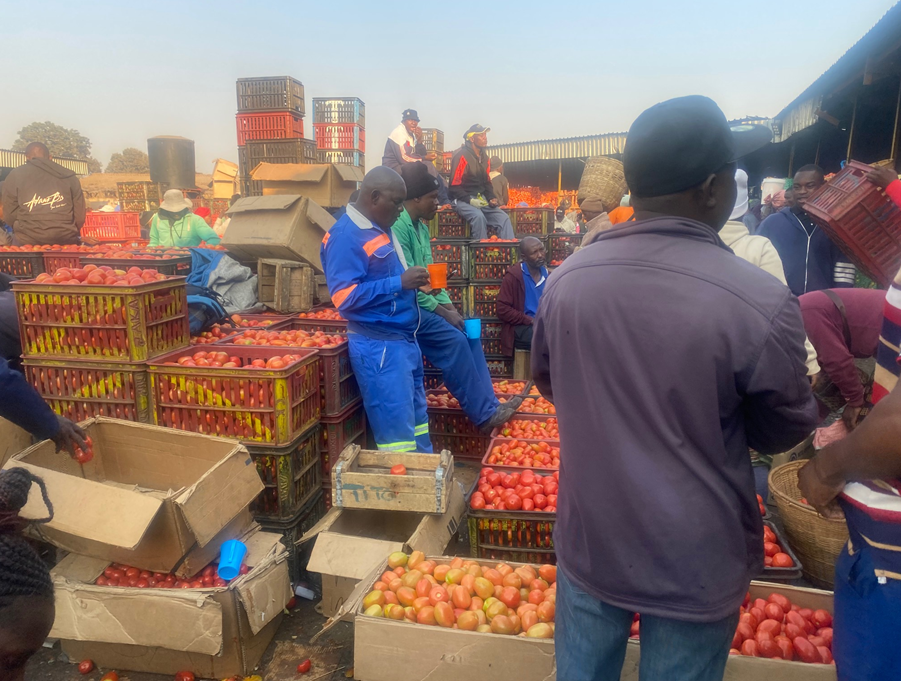
Mass markets offer new grounds for interpreting African economic realities
It is only through working with mass markets that African policy makers and researchers can make informed decisions that support genuine collaboration and learning. People who don’t understand mass markets assume these fluid institutions are all about buying and selling commodities. Yet the diversity of food practices in mass markets show how they are driven by culturally-rooted food supply models that do not just value commodities through prices. Understanding mass markets can also inspire new grounds for interpreting nutrition within local food systems.
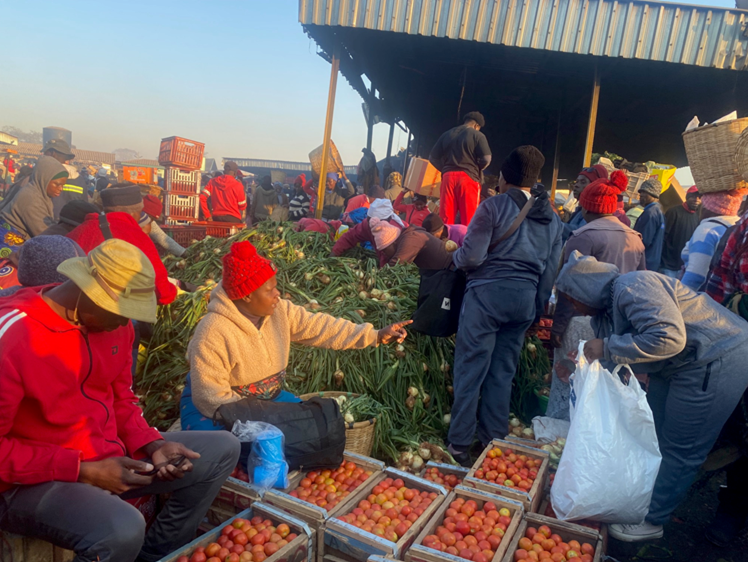
Besides demonstrating linkages between food and identity, African mass markets also say something about the identity of farmers and consumers. That is why profiling farmers and consumers becomes very important. To fully understand food systems through studying mass markets, African scholars should not continue relying on conceptual and theoretical frameworks developed in the Global North. That approach hampers the development of comprehensive understanding of African food systems that are mostly driven by mass markets. It also limits opportunities to learn from the rich pool of local knowledge and food practices that have remained undocumented for decades.
From individual rewards to community incentives
While approaches from the Global North emphasize individualism by promoting individual rewards, African mass markets are re-educating farming communities about the value of moving away from rewarding agricultural performance as an individual achievement to community incentives. That shows knowledge is spreading in the community from the mass market. When farmers go back home from the market, they share a lot of market intelligence with their peers. On the other hand, corporate models borrowed from the Global North reward individual farmers who whose field days as if farming is an individual achievement. However, the mass market takes commodities from every farmer including those who don’t host field days. Continuously rewarding individual farmers is a sign that knowledge is not spreading to more farmers. Agricultural incentives should come at community level rather than individual. That way, communities benefit from the prizes.
The more incentives are broadened to cover the whole community, the more knowledge is shared. If you incentivize one farmer and expect more than 2000 other farmers to come and learn from him/her it means the farmer will have to stop farming and concentrate on hosting all these peers. The notion of field days should move from conventional commodities like maize, groundnuts, cotton and tobacco to horticulture. There should be field days in community gardens and at irrigation schemes. If everybody adopts knowledge in a community it becomes ideal to incentivize the whole community. Input suppliers should not just give inputs to one successful farmer who is already doing well from his/her own resources. If you want to prove that your inputs are viable, target the under-privileged who do not have resources. For example, you can establish a demo plot at a widow’s farm or a field owned by a child-headed household. It is at these households that food security challenges are common. Why target the already well to do?
A winning farmer always works with the local community where some members provide labor and other services. No farmer can win alone. That is why it is important to build agricultural financing models around communities and their local markets as opposed to targeting individual members of a community. Community knowledge should be considered as collateral not just individual knowledge. Exhibitions outside the country are not usually done by individuals, but representatives of communities and countries. It is important to organize knowledge sharing sessions with communities not just with formal business people. Real farmers not farmer unions should get an opportunity to share knowledge at national level, representing their respective communities.
Using mass markets to target support
Another way for development organizations to effectively support farming communities is by getting into the local market where evidence can show commodity prices and where commodities are coming from. Such information can assist in supporting production in communities where food is coming from so that they can feed the rest of the communities. This is how mass markets provide intelligence about each community’s economic drivers including untaped potential. Investment opportunities and proper resource utilization can be prioritized using evidence from the market.
Re-discovering culturally-rooted food supply chains
With enough recognition, support and protection, mass markets can facilitate knowledge exchange around ethical and cultural characteristics of food and food systems. They can also enable rediscovering of culturally-rooted food supply models that are under threat from global supply chains. Emerging food interpretations, from mass markets do not cast food as solely market-oriented, but reveal its socio-cultural aspects, manifested through solidarity with local producers or consumers, establishing linkages between food and local identity, maintaining local traditions of food production and consumption.
Mass markets also express environmental concerns by supporting environmentally friendly food production, distribution and consumption. These food supply models have a long history of preserving strong cultural roots such as informal food flows from rural to urban areas, indigenous food processing and preservation, extensive wild product foraging as well as a rich history of food sharing. To what extent can food supply and market theories that have been developed in the West and imported through formal education capture all these peculiarities and roles of mass markets in African contexts? Such peculiarities include how mass markets are governed differently from formal markets and how they creatively deal with social entrepreneurships.
Charles@knowledgetransafrica.com / charles@emkambo.co.zw /
Website: www.emkambo.co.zw / www.knowledgetransafrica.com
Mobile: 0772 137 717/ 0774 430 309/ 0712 737 430