
Most methods and tools used to collect data from farming communities and mass markets by development organizations and formal researchers have remained too academic and irrelevant to the grassroots. For instance, methods and tools used to collect data on crop and livestock assessments continue to be too prescriptive. Such tools have no room for farmers, traders, vendors and ordinary people to contribute meaningfully in making sense of the data. As if that is not enough the tools are designed to capture quantitative data as opposed to qualitative data which is more fluid, dynamic and speaks directly to the local context.
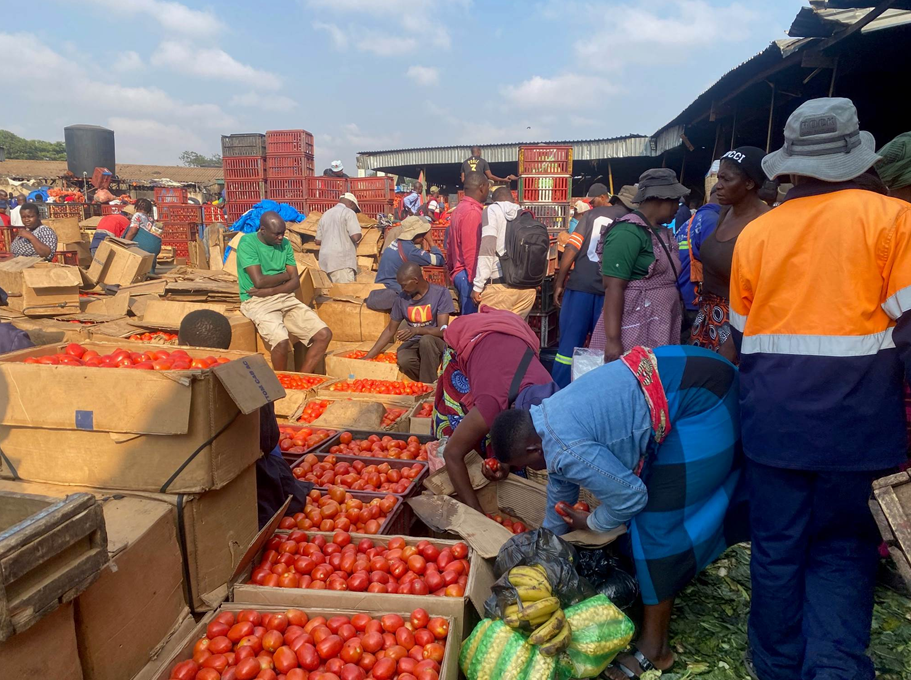
Demographic data is rarely used in analysis as part of linking data to findings. Instead, demographic data is often only used to depict the gender composition of respondents. Conversely, most farmers and traders function like institutions that capture and process fluid information in practice. This is unlike formal institutions where information is sent to head offices for processing, interpretation and analysis. While a lot is happening as farmers and traders do their work, there are no systems for capturing the emerging fluid data embedded in diverse work flows.
Which data collection methods are relevant for the Super El-Nino?
While accurate real-time data is always critical for a strong food system, the Super El-Nino sweeping across many African countries calls for innovative data collection methods for effective and quick decision-making by farmers and policy makers. A key part of the food supply chain are traders in mass markets and vendors in residential areas whose main roles include buying and distributing commodities to end users. To stem the disruption of agricultural systems and food supply chains by the Super El-Nino, farmers and other value chain actors require data that anchor early warnings.
If carefully consulted, African mass markets can contribute data collection and interpretation methods that are firmly anchored on trends in African food systems. The entry point is examining the whole national food basket broken down into sources of supply, destination (distribution pattern) also broken down into several distribution pathways – farmers to supermarket, farmers to mass market, mass markets to hotel and restaurant and farmers to direct end-users like households. Carefully examining and putting weight on each distribution channel can reveal how more than sixty percent of food commodities in particular African countries passes through mass markets.
Harnessing tools built from local knowledge
Academic tradition has insisted on developing questionnaires and market guides but each community has people who do research on behalf of the community. For instance, Mbare market in Harare Zimbabwe does research for other markets like Bulawayo, Gweru and Masvingo in terms of food that is in different farming communities and emerging local consumer trends. Unfortunately, these practices have remained undocumented. A critical drought mitigation measure by government departments or development agencies can be documenting existing food flow patterns and setting up a permanent data collection system. Communities that produce a lot of avocadoes, banana, sugar cane, pine apples and other horticulture commodities would not need continuous repetitive research if there was a data collection system.
Instead of each new intervention causing fatigue among farmers through disconnected interviews and questionnaires, the fluid data collection system would see information seamlessly flowing from farming communities to various markets and vice-versa, the same way commodities and people move between production zones and markets daily. Likewise, there would be no need for baseline research on tomato production in Mutoko as the data and work flow system would ensure seamless information flow between Mutoko and Mbare and other markets. Farmers may not need to conduct fresh market research each time they want to sell commodities. They will simply consult the data and workflow system without conducting research from scratch. It also becomes easy to position value chain actors. That way, information and knowledge is not de-linked from commodities.
The limits of random sampling versus the power of targeted sampling
Unlike academic-oriented research methods that prioritize random sampling as used by government statistical agencies and development organizations, informative research from mass markets can start by identifying and targeting key actors like traders who are the key informants. Random sampling can be partially ideal for communities or villages where people have similar characteristics. However, if random sampling is conducted around a single crop where production has many factors that affect a farmer’s production patterns, it is possible to miss critical aspects. That is where targeting particular informants like poor farmers, widows, child-headed households, vendors, traders, pensioners and others in the same community generate better results.
The good thing about targeted sampling in mass markets is that it builds on existing trends. For instance, among tomato farmers and traders, who are the champions? Besides being knowledgeable, champion farmers and traders tend to be influential in determining prices. They are also good at estimating volumes and sources from different sources because they participate in procuring commodities for the broader market. Farmers may not be able to know collective volumes from their community destined for the market because they operate individually and have different needs to be able to consolidate surplus volumes for the market. But they can have rich insights in relation to commodities in which they specialize.
Toward data consolidation centers
As fluid institutions, mass markets now need centers where data and statistics are consolidated like in processing companies or supermarkets where you can get records of stocks and sales. Building such a center can start with engaging very knowledgeable and experienced traders who know about trends and supply corridors. Such a system can also monitor food baskets and ensure nutrition baskets from January to December have all the necessary nutrients even if some fruits which supply specific nutrients are out of season. Capturing trends is critical if such issues are to be adequately answered. It means monitoring market trends is as much a nutrition issue as it is an economic issue. Knowledgeable traders can also contribute insights to forecast future trends more than can be done by dormant statistics from government statistical agencies. Working with trader also makes it easy for decision makers and investors to know when gluts and shortages are anticipated.
The power of mixing and matching research methods in mass markets
Institutions that focus on one or two value chains when studying mass market do not realize that all value chains in mass markets do not exist in isolation. Wild fruits like Mazhanje can negatively affect tomatoes in ways that farmers and academic institutions may never understand. That is why mixing and matching research methods is critical when trying to acquire knowledge from mass markets for guiding drought mitigation measures. From eMKambo experience working with mass markets over the past decade, creatively mixing and matching the following data collection methods can generate useful knowledge:
- Observation – 25%
- Informal conversations and relaxed interviews – 40%
- Mobile phone-based information sharing – 10%
- Volunteered information – 10%
- Community dialogues, Focus Group Discussions and interactions – 15%
All these methods are anchored on relationships, networks and trust as the confidence builders. Knowledge about particular value chains triggers a critical give and take or trade-off in knowledge exchange. If a potato trader sees that the interviewer understands potatoes, s/he will open up and give more information. No amount of academic methods or AI can out-shine this inclusive approach.
Charles@knowledgetransafrica.com / charles@emkambo.co.zw /
Website: www.emkambo.co.zw / www.knowledgetransafrica.com
Mobile: 0772 137 717/ 0774 430 309/0712737430