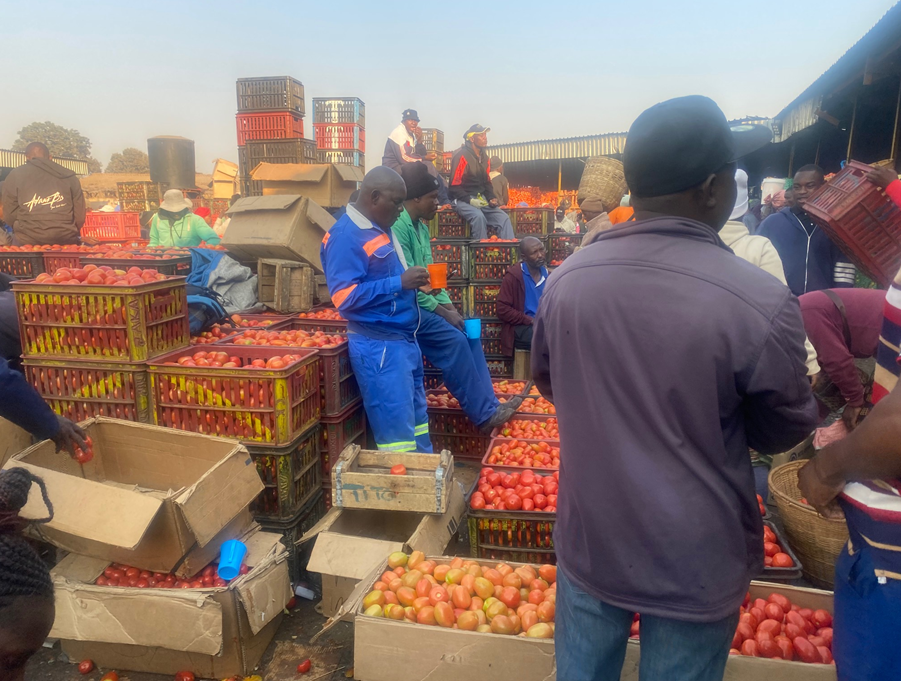
Across Africa, there is no shortage of training courses and capacity building programs for farmers, women, youths, SMEs and economic actors. While all these activities and strategies are necessary, nothing trumps calling and natural gifts. Farmers by calling do not need a cheering crowd. They do not feel entitled to receive awards for their farming prowess. They just feel compelled to make a difference in their communities. They do not measure their excellence by the number of awards or yields per hectare but their influence on other farmers.
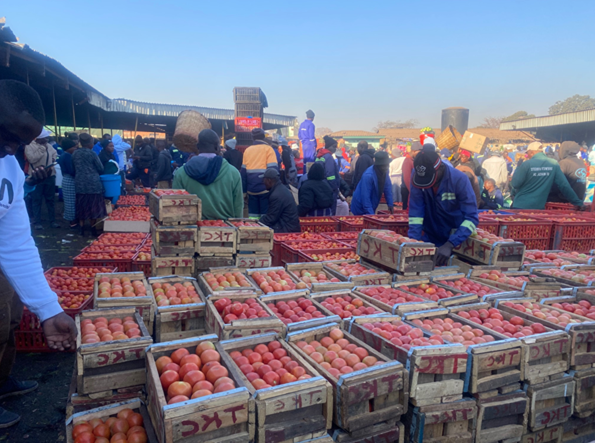
This could be lesson for government, contract companies and development agencies. Insights from mass markets are revealing that instead of rewarding individual farmers on the basis of their yields, the quality of commodities and consistency in supply differentiates a profitable farmer from a hand to mouth farmer. it is also becoming more important to recognize farmers and other value chain actors for their leadership and capacity to persuade more youths into agriculture. In a changing climate, it makes sense to reward farmers for their resilience in difficult environments than achievements under easy circumstances where resources are abundant and dormant. There is need for a new generation of crop and livestock insurance models that recognize farmers for what they are doing to build healthier soils and ensure more resilient and sustainable food systems.
Continuous revisiting of what agricultural success means
It is important for policy makers and development agencies to continue revisiting key elements of agricultural success. Value addition is supposed to happen at each stage of product development. In the agriculture sector, such stages include: Production, Harvesting, Storage, Packaging, Transportation, Processing and Marketing. From production to harvesting, a farmer should add value to each product or service. The moment you begin thinking about seed, you need to start answering questions around what soil, land, water, fertilizer and other requirements are needed. Entertaining such questions is already part of adding value. Unfortunately, most new farmers think farming is just about getting a piece of land. It is important to look at the cost of value addition from seed to harvesting. Each farmer should ask himself/herself whether s/he really wants to be a farmer or someone else. Do you have the requisite knowledge and resources for farming? Each value chain node has its barriers to entry. Some farmers have been in business for more than 30 years. Others have superior climate, soil and water. How much do you measure yourself against these actors?
Famers and value chain actors who ignore the above factors are often surprised when invisible answers emerge from the market. After getting a loan, some farmers rush to produce any crops yet the customers they are targeting are already being saved. A key question is: What is going to be unique about your farming and commodities that will enable you to lure customers from existing suppliers? When you have harvested, packaged and ready for the market, who are you producing for, how much and what are their expected standards and specifications?
The power of mastering market trends
Almost all consumers are already being saved. It doesn’t follow that more production creates more consumers. That is why market research is fundamental. Most value chains have serious barriers to entry. What is more important is understanding market trends. Markets don’t have the same levels of security. Sometimes doors can be opened through the right timing. In fact, timing can reduce barriers to entry and once you get in you can start building your niche from within. Do not be a farmer who shows up once and disappear. That is how you lose your customers. Markets do not want to relate with you in that manner. Consistency in supply and participation in the market is crucial. Customers you are saving can easily become yours but once you take a break you can easily lose them.
Unfortunately, most of our farmers tend to be seasonal actors who open and close their businesses in line with seasons. It means they are always re-starting. A telling example is small scale poultry producers who take three months producing chickens, one month selling and the next three months producing, during which time they will not be participating in the market. Only one month is used for operations and the business is closed for three months. There are also high chances that by the time you go to buy chicks for the next round, costs will have increased and all profits are eroded. This is a self-created and self-defeating barrier to entry.
Consistency supports specialization
Consistency ensures specialization. Farmers who run from one commodity to another always lose a lot of resources including knowledge. Producing two or three commodities keeps your niche market active and increases your knowledge base. As you work on your chosen commodities you intensely understand the behavior of commodities on the market. That is how you ensure you don not lose your 20% customer base. There are cases where continued participation by the same farmers creates barriers for new entrants unless when one regular participant pulls out for whatever reasons.
Different models enable farmers to compare working with intermediaries and connecting directly with end-users. Most farmers are losing their credibility in the eyes of consumers or end-users to traders who are the final suppliers yet original producers like farmers should connect with end-users. In a fragmented market environment, intermediaries can continue receiving credit that is due to farmers. That is why it is important for farmers to build their own brands which identify them at an acute level. Farmer unions should facilitate this process so that consumers can directly talk to people who produce what they eat rather than continue engaging with intermediaries.
Another way for easy entry into a new market is through bringing a new product. Reducing price is not the best way of competing because it can lead to cut-throat competition which can completely destroy new entrants, especially those who will have borrowed to finance their first production. In most cases, new entrants are always price takers. One way of defending your proposal in front of financial institutions is explaining how you will deal with barriers to entry. What are your key strategies for breaking or navigating barriers to entry?
Investing in knowledge gathering
Experience is critical. You can partner with actors already in the market while you learn the ropes or you can farm on a lease basis with other farmers. Unless you ride on existing traders, some customers can identify and exploit you as a new entrant. At least three crops can enable you to insert yourself in the market. That is the same amount of time one needs to earn a university degree. It is also the same amount of time needed to build a concrete market and knowledge base. If you are a new farmer, do not just be a resource-provider. Learn about the commodities you are financing as well as about the market. As a farm owner, don’t leave everything to workers. Value chains are made up of different nodes but the most important asset is understanding the markets.
Most farmers may not remember the knowledge they used to produce commodities last season because there have not been intentional efforts to capture what happened. Conducting knowledge surveys can reveal what communities are probably forgetting and cases where wheels are being re-invented unnecessarily. When value chain actors or community members are assisted to identify their critical knowledge, they become empowered to spend most of their resources on the most valuable knowledge unlike chasing every suggestion from anyone.
With the right capacity building initiatives, every community can identify 20% of its knowledge that can make 80% of the difference in terms of community development outcomes and better livelihoods. They can be able to figure out circumstances where rapid learning is needed as well as kinds of knowledge that already exist among all community members, only requiring sharing as opposed to creating everything from scratch. For instance, if almost every farmer knows how to grow maize, there is no point in wasting time and resources on field days that focus on maize production. On the other hand, where old knowledge needs to be standardized into community routines, ways of standardizing such knowledge should be cultivated. For instance, knowledge on traditional basketry, livestock breeding and pottery can be lost to the future generation if not standardized and introduced into formal education systems. Where local experts like herbalists or black smith are not able to share their knowledge because of its intensely tacit nature, young people should be identified and incentivized to under-study these experts.
High value commodities are often associated with high value knowledge that has to be managed in different ways from low value knowledge. An important part of filtering critical high value local knowledge is identifying barriers to knowledge sharing and devising ways of over-coming such barriers. Some of the barriers can be invisible to local people but outsiders can see those barriers and provide the necessary solutions. Communities in many developing countries need skills in identifying what they need to know in order to avoid mistakes that if solved can move them out of physical and mental poverty.
Charles@knowledgetransafrica.com / charles@emkambo.co.zw /
Website: www.emkambo.co.zw / www.knowledgetransafrica.com
Mobile: 0772 137 717/ 0774 430 309/ 0712 737 430