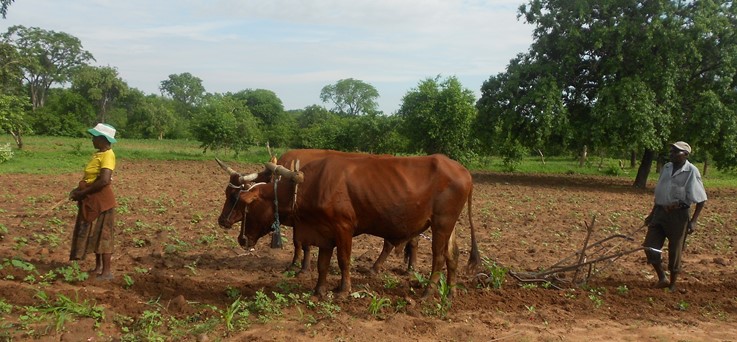
ANALYSIS:What has gone wrong with the groundnut market in Zimbabwe?

Groundnut has traditionally been a famous cash cow in Zimbabwe. Many Cabinet ministers, captains of industry, academics and bankers can testify to have gone to school because their parents were able to raise school fees through groundnut production and marketing. From those who knew him, the founder of Zimbabwe’s largest poultry company Irvine’s Day Old Read more about ANALYSIS:What has gone wrong with the groundnut market in Zimbabwe?[…]

The joys and benefits of learning directly from plants and animals.

In spite of the current obsession with formal learning approaches where people are encouraged to learn from each other, many African farmers remain convinced they can learn more from plants and animals. That is how, over generations, they have acquired knowledge from plant and animal medicines. Every rainy season provides farmers and every curious person Read more about The joys and benefits of learning directly from plants and animals.[…]

What makes informal institutions superior at embedding Knowledge!

Where formal organizations try to store their knowledge in the form of corporate processes and procedures, informal institutions like people’s agriculture markets pack their knowledge into routines and memorable metaphors. For many generations, the majority of African communities have thrived on knowledge condensed into idioms, metaphors and routines.  This way of dealing with knowledge has Read more about What makes informal institutions superior at embedding Knowledge![…]

Some of the reasons why small grains continue to resist winner take all commercialization

From Mali to Zimbabwe and South Africa to Southern Sudan, small grains remain an integral part of mainstream local food systems.  There are many reasons why small grains continue to pack a huge socio-economic punch in many countries.  To revisit and stimulate a frank discussion on the power of small grains, eMKambo has just completed Read more about Some of the reasons why small grains continue to resist winner take all commercialization[…]

The hybrid nature of most African economies

Most African economies are often presented as being dual, comprising the formal and informal economy. However, in real practice the two parts function as a hybrid economy which borrows from the two parts. Nowhere is this scenario more visible than in the agriculture sector where there is a fusion of formal and informal approaches all Read more about The hybrid nature of most African economies[…]

Silent and health competition in African fresh food markets

A few years ago, it appeared supermarkets were the only place where consumers would find fresh fruits and vegetables in African cities. The situation has changed dramatically.  Armed with new food safety knowledge and insights from consumers, informal and open fresh food markets have become preferred destinations for the majority of consumers. Imported fruits and Read more about Silent and health competition in African fresh food markets[…]

Lessons from how farmers view wealth creation as a holistic system

Although there is a tendency to treat the majority of African smallholder farmers as passive recipients of external information and knowledge, they are very good at learning from their experiences. In Zimbabwe, eMKambo has discovered that farming communities and individual farmers contribute to the national knowledge base more than they will ever know. They have Read more about Lessons from how farmers view wealth creation as a holistic system[…]

Taming agricultural value chains through data and evidence

Many people who grew up in African communities practicing mixed farming, remember how taming young bulls or steers into a span of oxen was not easy. The situation was the same with taming a cow to milk it when it had just given birth to its first calf. In most cases you would not complete Read more about Taming agricultural value chains through data and evidence[…]

It will take integrative thinkers to fully exploit African resources

The majority of African economies are too complex to be fully exploited through current formal education systems that promote silos. While it is important to have expertise in crop production, livestock production, nutrition, road construction and natural resources management, what matters is how all these forms of knowledge can be integrated into a cohesive system. Read more about It will take integrative thinkers to fully exploit African resources[…]

How informal agricultural traders capture and preserve customer loyalty

They may not advertise their products in the formal media, but informal agricultural traders have results-driven ways of capturing customer loyalty. Most of their skills have been honed over generations into unwritten intuitive laws that almost every trader is aware of. They understand customers more than customers know about themselves.  According to traders in Harare Read more about How informal agricultural traders capture and preserve customer loyalty[…]